Related: How to Hone a Knife Without Rounding the Edge
There is no knife set on the market that makes anyone a better cook. What exists is a kitchen knife and cutting board combination that stops fighting you, and that is the entire game. I have spent 16 years in kitchens, six of them on a fine dining line and four running a butcher shop, and I have sharpened more blades than most people will ever own. The lesson never changes: one knife you trust, one board that stays put, and a sharpening habit you actually keep.
This article is about four specific pieces, and only one of them is a knife. A seven inch santoku in high-carbon German steel. A 1.5 inch thick maple board from John Boos. A block set with the sharpener built into it. And a soft clear corner guard strip, which is not a knife product at all and is still the thing I would tell any household with a toddler to buy first.
I judge knives the way a kitchen uses them: prep work, service rushes, and the sharpness test I run every morning before the first ticket comes in. Here is what matters, what does not, and where each of these pieces fits.
The knife that does the work: a seven inch santoku
A santoku is the Japanese answer to the chef's knife: shorter, flatter along the edge, and built for a push cut instead of a rock. Seven inches is the sweet spot on a home board. Long enough to work through a head of cabbage, short enough to stay in control on a shallot.
What the spec sheet tells me here is high-carbon German steel and a non-slip handle, and those two things matter more than the blade shape. German steel runs softer than Japanese steel on the hardness scale. That is not a flaw. A softer steel rolls at the edge instead of chipping, which means it comes back on a honing steel in thirty seconds instead of going to a stone for twenty minutes. For someone cutting for twenty minutes a night, that is the right trade.
The handle is where cheap knives confess. A grip that stays comfortable after two hundred cuts is the difference between a knife you reach for and a knife that lives in the block. This one is built for slicing, dicing, and chopping meat and vegetables, which is 90 percent of what a home kitchen actually does.
What a santoku will not do: break down a chicken with speed, or go through a squash with the authority of a heavier blade. If those are your two most common jobs, look at a heavier chef's knife. If your board is mostly vegetables and proteins, this is the shape.
The board is half the equation: John Boos maple
Most people spend their whole budget on knives and cut on a thin plastic board that flexes under the blade, then wonder where the edge went. A cutting board is not an accessory. It is the other half of every cut you make.
This one is edge-grain maple, 1.5 inches thick, 20 by 15 inches, and it weighs around 12 pounds. The weight is the feature. A board that heavy does not need a damp towel under it to stay put, and a board that stays put is a board that does not slide while you are working through a pile of onions.
Edge-grain means the strips of maple run parallel to the surface. It is stable, it is easy to maintain, and it is more forgiving on an edge than people give it credit for. The board is reversible, so you get two working faces, and the finger grips let you lift 12 pounds off the counter without a fight. It is made in the USA, which matters to anyone who cares where their tools come from.
Treat it like wood. Hand wash, dry it standing on edge, oil it monthly with food-safe mineral oil, and never put it in a dishwasher. A board treated that way will outlive the knives you cut on it.
If you want a set, buy one that sharpens
I am on record saying a set is 80 percent chef's knife and 20 percent garnish, and I stand by it. Most 15-piece sets are a block, a bread knife that cannot slice bread, and four steak knives nobody uses.
This set earns a mention for one detail: the sharpener is built into the block. That is not a gimmick, it is a maintenance habit installed in furniture. Pull a knife out, the rods dress the edge, put it back. For the person who will never buy a whetstone, that is the difference between a set that still works in year three and a drawer of dull steel.
The trade is real, and you should know it before you buy. Built-in sharpeners are aggressive. They remove steel every time you use them, and a knife maintained that way for years will lose its profile faster than one kept on a stone and a honing steel. Use it the way it is meant to be used: a few strokes when the knife starts to drag, not twenty strokes every time you cook.
If you want a set for a rental kitchen, a first apartment, or a house where nobody is going to learn to sharpen, this is the sensible version of that purchase. If you are ready to maintain a knife properly, buy one good knife and a stone instead.
The piece nobody plans for
This is a two inch wide, thirteen foot roll of soft clear corner protector. It cuts to length, sticks to the corner, and takes the edge off a table, counter, or window sill. It is not a knife product, and I am not going to dress it up as one.
Here is why it belongs in a conversation about knives anyway. The most dangerous object in a kitchen is rarely the blade in your hand. It is the corner of a counter at hip height, the edge of a table a toddler runs past, the sharp lip of a cabinet. Anyone who has worked a line knows how many kitchen injuries come from furniture, not cutlery.
If there is a small child in the house, or an older adult who moves carefully, this is cheap insurance that takes ten minutes to install. Buy it before the knife, honestly. A dull knife annoys you. A corner does not.
How I judge a knife and a board
I do not sign off on a knife without running it through a prep shift. The order of questions is always the same.
Does it hold an edge? Not out of the box, which means nothing, but after an hour of onions, carrots, and proteins. A knife that is screaming sharp on day one and dragging by day thirty tells you the steel is too soft or the angle is too thin.
Is the handle comfortable after two hundred cuts? Grip is not a preference, it is a safety feature. A handle that forces your wrist into a bend will make you cut carelessly by the end of a long prep.
Can I sharpen it without fighting the tool? A thick bolster running to the edge of the blade makes stone work miserable. Full tang is non-negotiable for me. A bolted handle is a knife that will fail you mid-service.
Will it stay put? For a board: does it slide, does it flex, does the surface kill an edge faster than it should? A board is either a work surface or a problem.
And the last one, which matters more than any spec: would I reach for it on a busy Saturday? That is the test everything else serves.
A word on sharpening, because I will not talk knives without it. A honing steel is not a sharpener. It realigns an edge that has rolled, and it buys you time between sharpenings. A stone removes steel and creates a new edge. You need both, and you need to use the steel more often than you think.
What actually matters, and what is marketing
Steel hardness is a trade, not a ranking. German steel is softer and tougher. Japanese steel is harder and thinner. Harder steel holds an edge longer and chips more easily. Softer steel loses an edge faster and comes back in seconds on a steel. Neither is better. The question is whether the person holding the knife will maintain it.
Blade shape is about your board, not your ego. A santoku pushes through vegetables. A chef's knife rocks through herbs and proteins. Buy for what you cook most, not for what looks serious.
Full tang is the line between a tool and a toy. If the steel does not run the length of the handle, the handle is attached to the blade rather than continuous with it, and that joint is where knives fail.
Edge geometry decides how a knife feels. A thin edge glides through an onion and is fragile. A thick edge is durable and feels like a wedge. Most complaints about a knife not being sharp are really complaints about geometry, and no amount of sharpening fixes geometry.
Board material decides how long an edge lasts. Glass and bamboo are edge killers. Hard plastic is acceptable and unkind. Maple is the standard for a reason: firm enough to hold up, soft enough not to roll an edge on contact.
Maintenance is the whole game. Any knife goes dull. A knife you hone weekly and sharpen twice a year will outperform a more expensive knife that never gets touched.
Marketing language to ignore: professional on a bolsterless knife, 15-piece on a set with four steak knives, stays sharp forever on anything. A set is a starter kit. A knife and a stone are a commitment.
The reference table
| Item | What it is | Where it earns its keep | Notes |
|---|---|---|---|
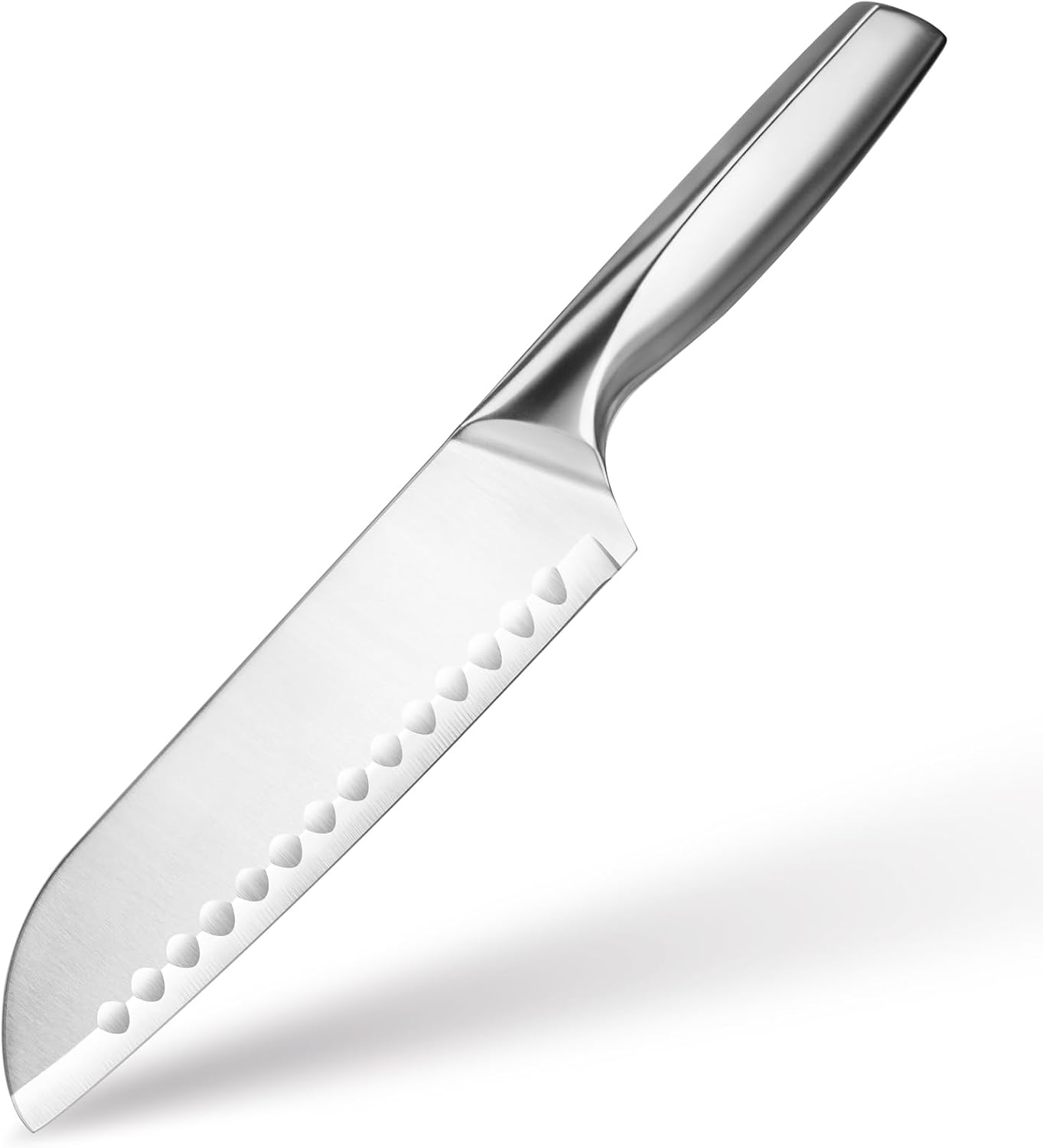 Visit on Amazon → Visit on Amazon →Santoku knife, 7 inch |
High-carbon German steel, non-slip handle | Slicing, dicing, and chopping vegetables and proteins | Push cut, not a rocker |
 Visit on Amazon → Visit on Amazon →John Boos R-Board maple board |
Edge-grain maple, 1.5 inches thick, 20 by 15 inches, reversible | A stable surface that does not dull an edge | Hand wash, oil monthly |
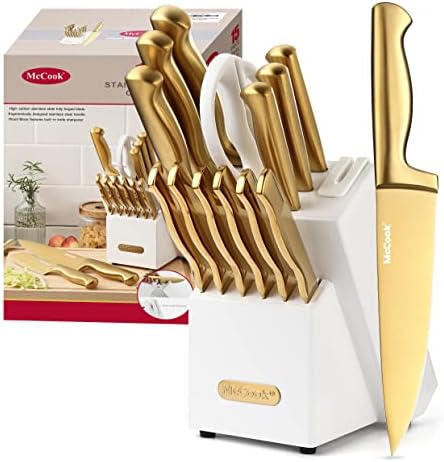 Visit on Amazon → Visit on Amazon →McCook knife set |
Steel block set with a sharpener built into the block | Households that will never buy a stone | Aggressive sharpening, use sparingly |
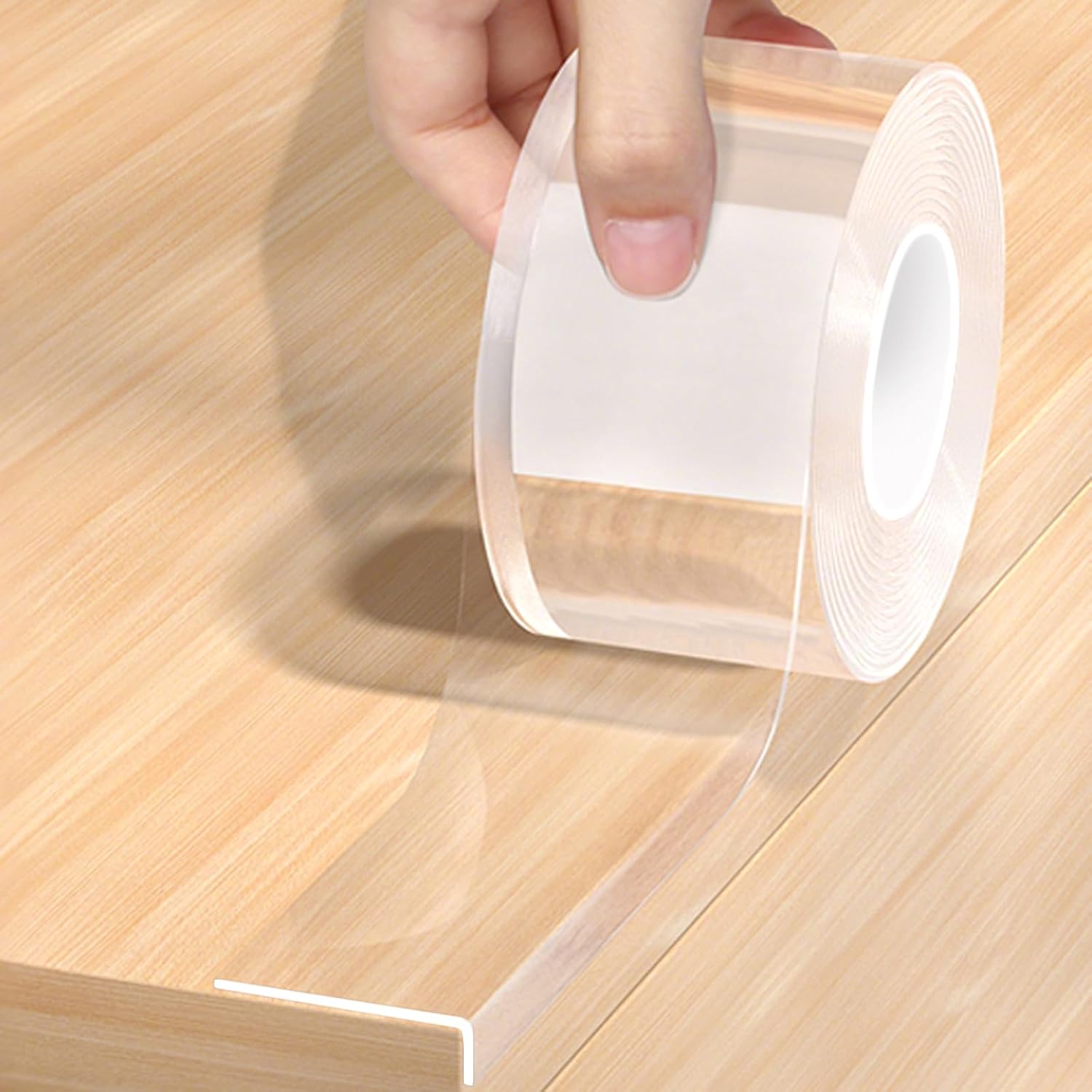 Visit on Amazon → Visit on Amazon →Soft corner protector strip |
2 inch by 13.12 ft clear soft strip | Tables, counters, window edges, homes with kids | Not a knife product, still worth it |
Should you buy the santoku?
If your board is mostly vegetables and proteins, and you want one knife that comes back on a steel, yes. Seven inches, German steel, and a handle built to stay comfortable. It is not the knife for breaking down chickens or splitting squash. Pair it with a honing steel and it will work for years.
Should you buy the John Boos board?
Yes, if you are going to oil it. A 12 pound maple board at 1.5 inches thick is a lifetime tool, and it is the upgrade most home kitchens skip. It stays put, it is reversible, and it treats your edge better than anything plastic. If you will not hand wash and oil it, buy something cheaper and accept the compromise.
Should you buy the knife set with the built-in sharpener?
Yes, for a first apartment, a rental, or a house where nobody will learn to sharpen. The built-in sharpener is the reason to pick it over a similar set without one. Use it sparingly, and know that you are trading some long term blade life for convenience.
Should you buy the corner protector strip?
If there is a toddler or an older adult in the house, yes, and buy it before anything else on this list. It cuts to length, covers the corner you keep walking into, and costs less than a decent honing steel.