Related: Best Cutting Boards for a Working Kitchen
A knife is only as good as the habit around it. Six years on fine-dining lines and four running a butcher shop taught me that the blades that quit on people were rarely the cheap ones. They were the good ones nobody maintained. Sharpness is a maintenance habit, not a purchase, and the best knife in the world goes dull on a schedule whether you like it or not.
So this is not a knife set guide. It is a knife care guide, built around the four pieces that keep edges working: a sharpener, a board, a place to store the blades, and a small knife you will reach for a hundred times a week. This is the knife sharpening and storage essentials list I would hand a home cook who is tired of fighting a dull blade at 6pm. Nothing here is a $400 gyuto. Everything here supports the knives you already own, which is where your money should be going anyway.
Two things before we start. A honing steel is not a sharpener. It realigns an edge that is still there, and you need one alongside a sharpener, not instead of one. And a pull-through sharpener removes metal every time you use it, so the slot you choose matters as much as the tool itself.
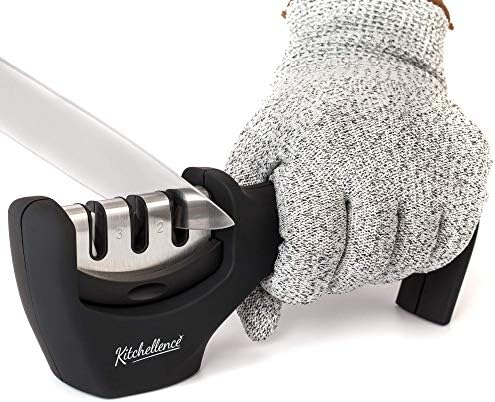
The sharpener: 4-in-1 Kitchen Knife Accessories with 3-Stage Sharpener and Cut-Resistant Glove
No knife talk without a sharpening recommendation, so this comes first. This kit is a three-stage pull-through sharpener plus a cut-resistant glove, and the three stages are the part worth understanding. The coarse slot repairs a damaged edge. The middle slot restores a working edge. The fine slot polishes. Most home cooks should live in the middle and fine slots and treat the coarse one like a power tool that you only pick up when something is actually broken.
The mistake I see constantly is someone running a decent chef's knife through the coarse slot every Sunday because it feels productive. That is how a chef's knife slowly becomes a paring knife. Use coarse when you have rolled or chipped an edge, which is rare, and use the finer stages for weekly upkeep. A few light passes, then test the edge on a ripe tomato. If the tomato skin splits without you pushing, you are done. If you are sawing, you have more work to do, but do it in the fine slot before you escalate.
The glove is not a gimmick either. A sharp knife is safer than a dull one, but the sharpening process itself is when your fingers are closest to the edge and your attention is on the slot, not on your hand. A cut-resistant glove is cheap insurance for the five minutes a week you spend on maintenance, and it is also useful when you are breaking down a pile of squash or opening oysters.
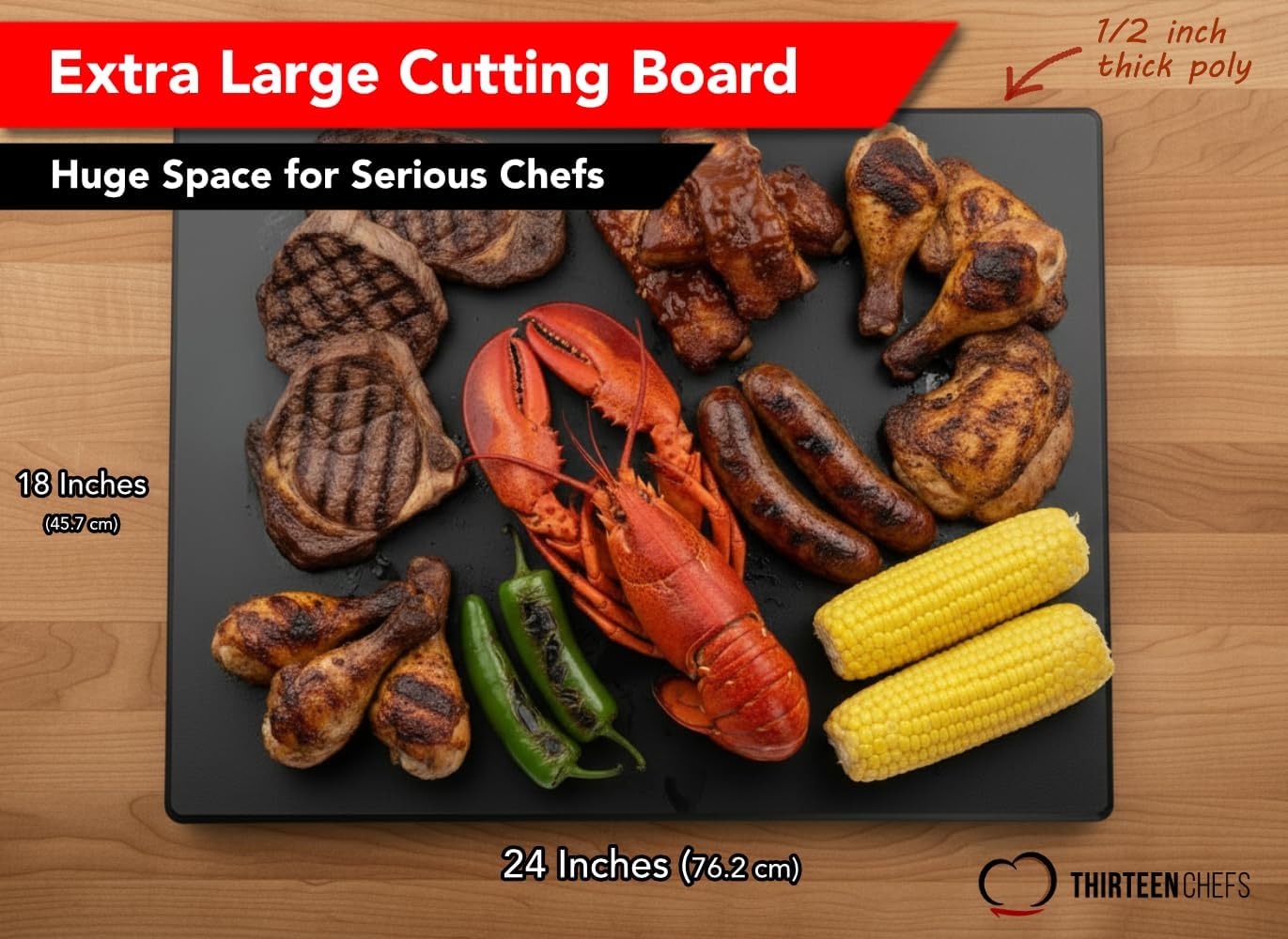
The board: Thirteen Chefs 24x18 Black Cutting Board, Extra Large 1/2" Thick Plastic
The board is the most underrated piece of knife care gear in a home kitchen. A crowded board makes you saw at food instead of slicing it, and sawing is what dulls an edge and bruises your produce. At 24 by 18 inches, this one gives you room to break down a whole chicken or a pile of onions without stacking anything, which means you can actually use the length of the blade the way it was designed to be used.
The 1/2 inch thickness matters more than people expect. Thin boards flex under a heavy cut, and a flexing board is a board that moves. A half inch of plastic stays flat and stays put, especially with a damp towel underneath it, which is the trick I use on every board in every kitchen I have worked in. It costs nothing and it solves 90 percent of slipping.
Plastic is the practical choice for raw proteins because you can wash it in hot soapy water and, when you have used it hard for a couple of years, replace it without guilt. Watch for deep scoring. Once a board is scored heavily it traps everything you cut on it, and no amount of scrubbing gets that back. A black board also hides the knife marks that would bother you on a white one, which is a small thing that makes a real difference in how often you reach for it.
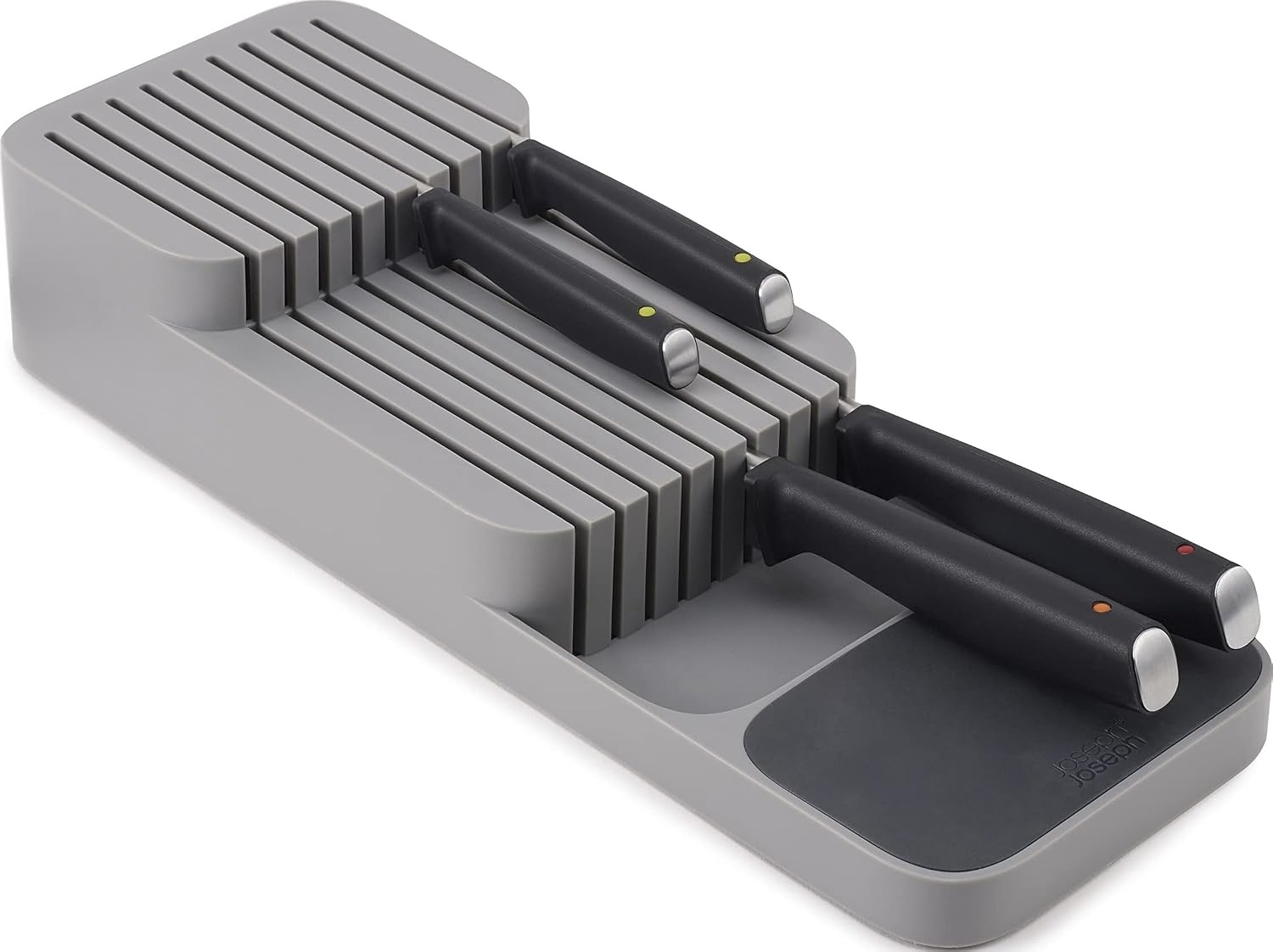
Storage: Joseph Joseph DrawerStore Knife Organizer
Here is a hard truth about knife blocks: most of them dull your blades on the way in and out. The slot grabs the edge every time, and a knife that gets dragged across a wooden slot twice a day is a knife that needs sharpening twice as often. I keep my daily knives on a magnetic strip and I keep the block for guests, and if you do not want a strip on your wall, a drawer organizer is the next best thing.
This one holds up to 9 knives in a compact footprint, which is more capacity than most home cooks need and enough for a chef's knife, a bread knife, a couple of paring knives, and whatever else has accumulated. The point is separation. Blades that touch each other in a drawer chip each other, and a chipped edge means a trip to the coarse slot, which means metal you never get back.
If you have a drawer that currently holds a tangled pile of knives and a vegetable peeler, this is the cheapest upgrade in this entire guide. Your knives get a home, your counter gets space back, and your edges stop colliding.
The small knife: Paring Knife, 4 inch Set of 4 with Cover Sheaths
I have said before that a knife set is 80 percent chef's knife and the rest is garnish. That does not mean the garnish pieces are useless. It means you should not pay chef's knife money for them. A paring knife is the second most used blade in most kitchens, and it is the one that does the work nobody thinks about: peeling apples, hulling strawberries, trimming green beans, deveining shrimp, cutting up food for a toddler.
A four inch stainless blade is the right size for that work, and a set of four with cover sheaths means you stop rationing. One lives in the drawer, one rides in a knife roll or a tote for camping and cookouts, and you have spares for when someone else is in your kitchen helping. The sheaths are the detail that matters most here, because a loose paring knife rattling around a drawer is exactly how edges get damaged.
This is also the category where cheap is genuinely fine. A small blade doing light work does not need a high-end steel or a full tang the way your chef's knife does. It needs to be sharp, it needs to fit your hand, and it needs a cover so it does not get wrecked between uses. Spend your money on the chef's knife and the sharpener. Spend almost nothing here.
How I evaluate knife care gear
Everything around a knife gets judged by one question: does it make the edge last longer and the work go faster? I run a morning sharpness test on whatever is in my hands, which is nothing more complicated than dragging a blade through a ripe tomato before service. If it slides through under its own weight, the edge is there. If it bruises the skin, it is time to work on it. That test is the reason I care so much about the boring gear in this guide, because a sharpener, a board, and a drawer are the three things that determine what that tomato test looks like a month from now.
Boards get judged on stability and size. If a board moves, you cut slower and less accurately. If it is too small, you crowd the food and start chopping with the tip instead of slicing with the length, which is a habit that dulls edges and produces uneven cuts. Sharpening gear gets judged on whether it lets you touch up an edge in under a minute, because the sharpener you actually use beats the stone you are intimidated by. Storage gets judged on whether blades touch each other. That is it. There is no mystery to any of it.
The reference table: knife care gear at a glance
| Gear | Role in a working kitchen | What to check | Who it is for |
|---|---|---|---|
 Visit on Amazon → Visit on Amazon →3-stage sharpener and glove |
Weekly edge maintenance, occasional repair | Stay out of the coarse slot unless the edge is damaged | Anyone whose knives have not been sharpened in a year |
 Visit on Amazon → Visit on Amazon →24x18 cutting board |
The main prep surface | 1/2 inch thickness, extra large footprint, damp towel underneath | Cooks who prep more than one vegetable at a time |
 Visit on Amazon → Visit on Amazon →Drawer knife organizer |
Keeps blades separated and off the counter | Capacity of up to 9 knives | Anyone with a knife block or a crowded drawer |
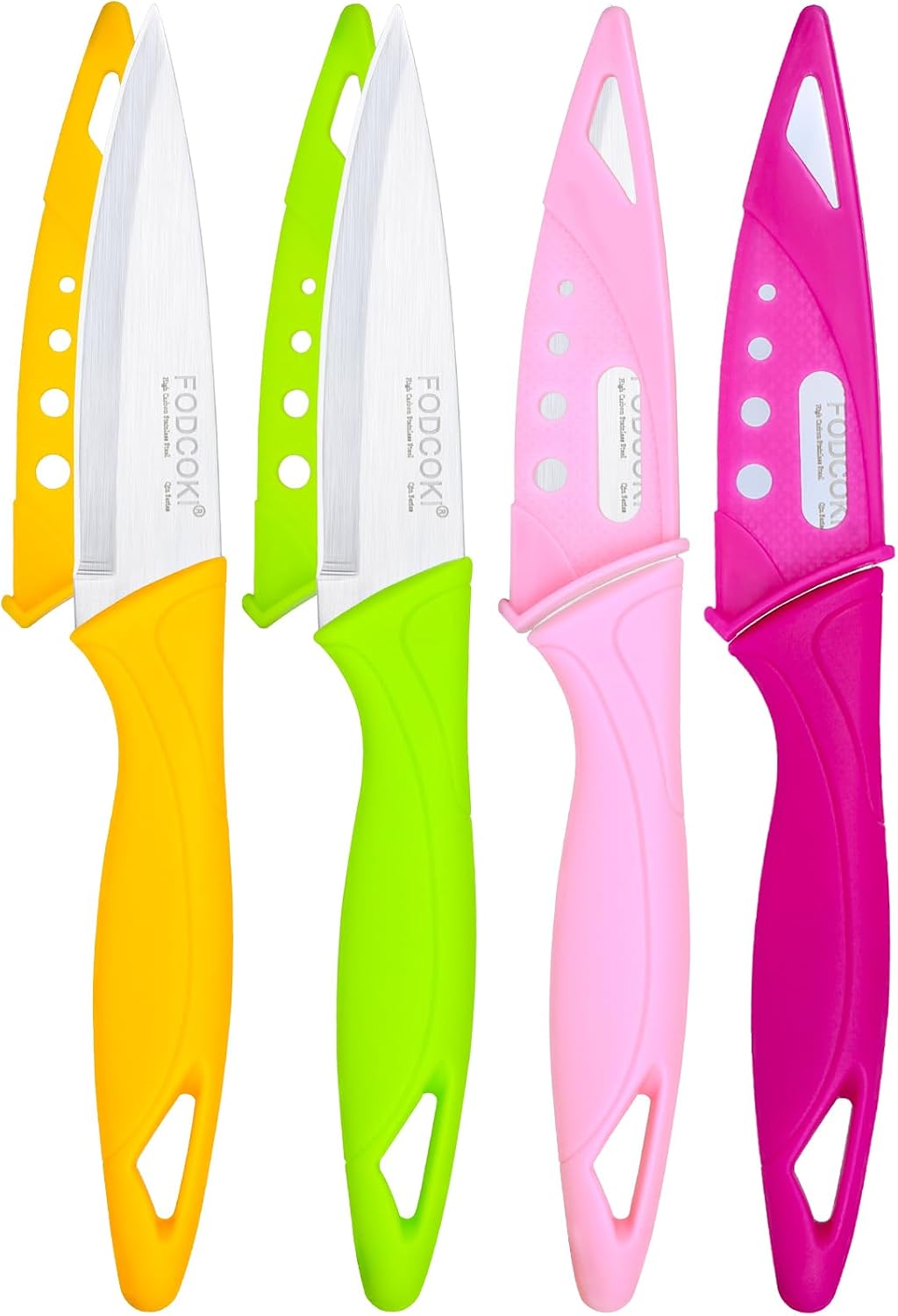 Visit on Amazon → Visit on Amazon →4 inch paring knives with sheaths |
Peeling, trimming, garnish, small cuts | Cover sheaths for storage and travel | Households that do a lot of small knife work |
What the table leaves out
The table tells you what each piece does. It does not tell you the schedule, and the schedule is the whole game. Hone your knives with a steel before most sessions, because honing realigns an edge that is still there and buys you weeks between sharpenings. Sharpen when honing stops working, which for a home cook is usually every couple of months and for anyone cooking professionally is a lot more often than that. Wash and dry your knives by hand. Never leave one in the sink, because that is how edges get chipped and how people get cut.
Skip the 15-piece sets. You are paying for a block, four steak knives, and a bread knife you will never use, and the block is the piece that dulls everything you put in it. Buy fewer knives and take care of them. A chef's knife, a paring knife, a bread knife, a board, a sharpener, and a drawer organizer is a complete kitchen. Everything past that is a hobby, and I say that as someone with a drawer full of hobbies.
Should you buy the 3-stage sharpener and cut-resistant glove?
Yes, if your knives are dull and you are not ready to learn a whetstone. The three stages cover repair, restoration, and polishing, and the fine slot is where you will spend most of your time. Just respect the coarse slot. The glove is the part people skip, and it is the part that keeps a maintenance habit from turning into a bandage.
Should you buy the Thirteen Chefs 24x18 cutting board?
Yes, if you prep more than one thing at a time. Extra large means you stop crowding food, and half an inch of thickness means the board stays flat and stays put with a damp towel under it. It is plastic, which is the right call for raw proteins and for anyone who wants to wash a board without a ritual.
Should you buy the Joseph Joseph DrawerStore knife organizer?
Yes, if your knives live in a drawer or a block. It holds up to 9 knives, it is compact, and it does the one job that matters: it keeps edges from touching each other. It is the least expensive way to stop damaging knives you already own.
Should you buy the 4 inch paring knife set?
Yes. Four stainless paring knives with cover sheaths covers peeling, trimming, and garnish work for years, and the sheaths mean you can store or carry one without wrecking the edge. Spend the real money on your chef's knife and your sharpener. This is the piece where you do not have to.