I have spent 16 years in professional kitchens, six of them as a line cook in fine dining and four running a butcher shop, and I have sharpened more knives than most people will ever own. Thousands of blades, from stamped supermarket specials to a $400 gyuto I bought in a year when I had more ambition than savings. That is the lens I bring to this comparison of kitchen knife sets and sharpening stones. I am not ranking four products by how they photograph in a block. I am ranking them by what happens in week three, when the novelty is gone and dinner still has to get made.
Here is the uncomfortable half of knife shopping: the knives are the easy part. Anyone can sell you a stack of steel and a block. Almost nobody sells you an edge that survives a month of onions, tomatoes, and a roommate who cuts on a glass board. So this comparison covers both halves of the purchase, the knives and the thing that keeps the knives worth owning.
The short answer: for most home kitchens I would pair the Cuisinart Classic Forged Triple Rivet set with the Shapton Kuromaku whetstones, put a genuinely tight budget on the colorful 13-piece set, and add the Arcos paring trio once you know which knife you actually reach for. The long answer involves tangs, hardness, bolsters, and why a honing steel is not a sharpener.
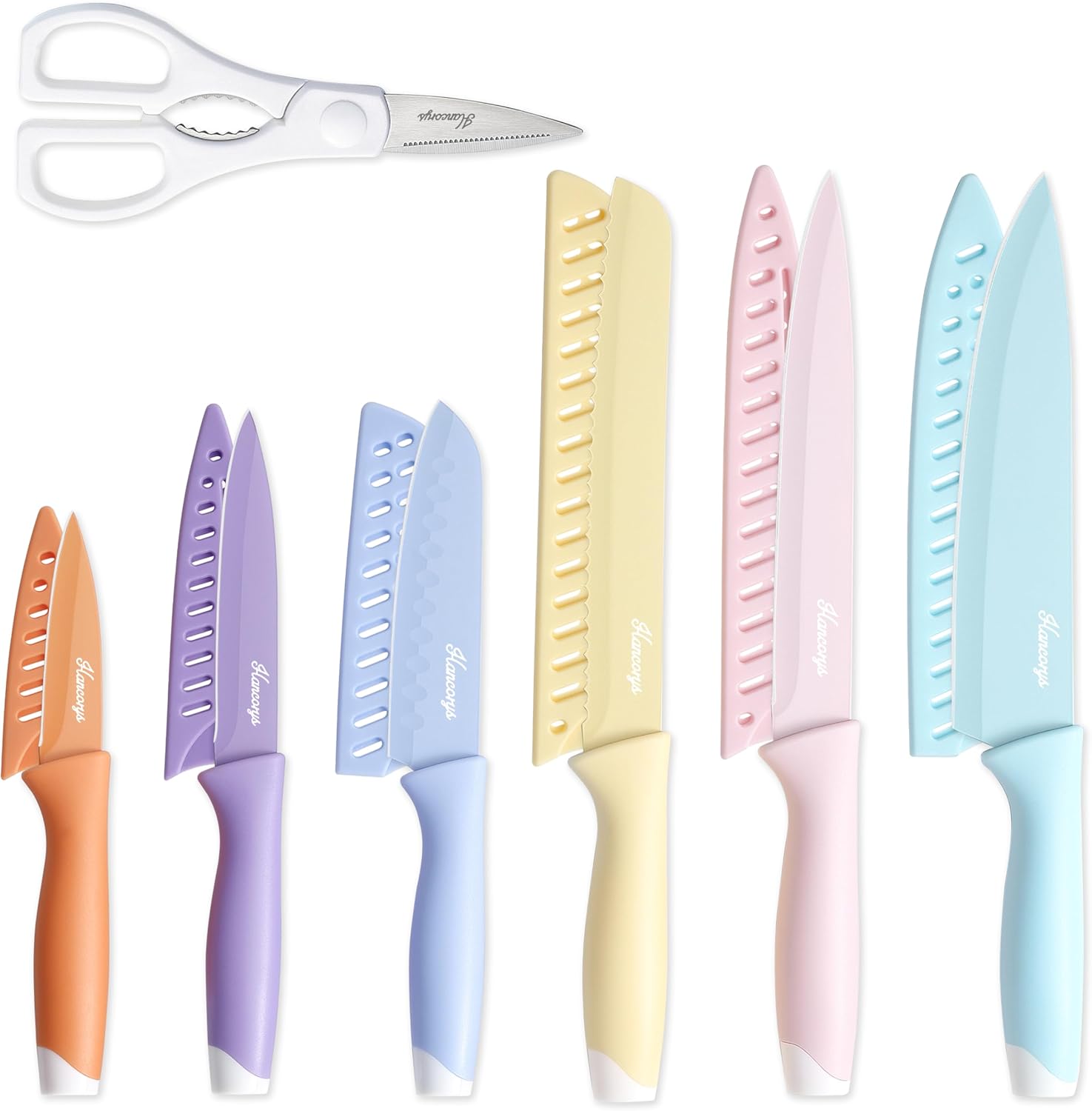
Knife Set, 13 PCS Colorful Kitchen Knives Set with 6 Blade Guards
Cheapest way into a full drawer of shapes, and the six blade guards protect edges that would otherwise get knocked around loose
Stamped blades, no full tang, and soft steel that will not hold an edge through heavy prep
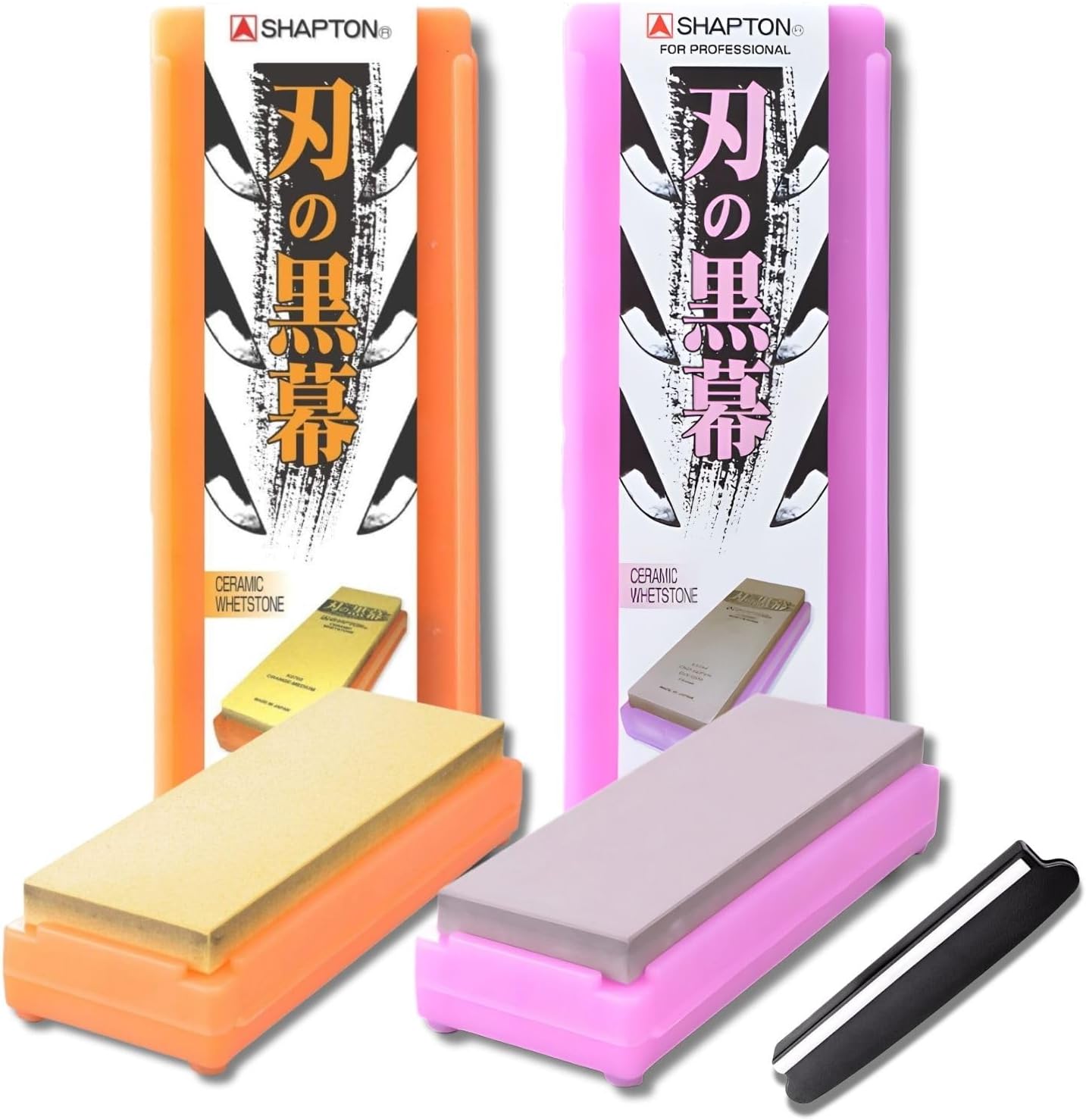
Shapton Kuromaku Whetstone Sharpening Stone Set, Japanese 1000 & 5000 Grit Knife Sharpening Stones with Knife Sharpening Angle Guide for Kitchen & Chef’s Knives
A 1000-grit stone for real work and a 5000-grit for polish, plus an angle guide that keeps a beginner honest
It is an investment next to a budget set, and water stones demand soaking, drying, and flattening
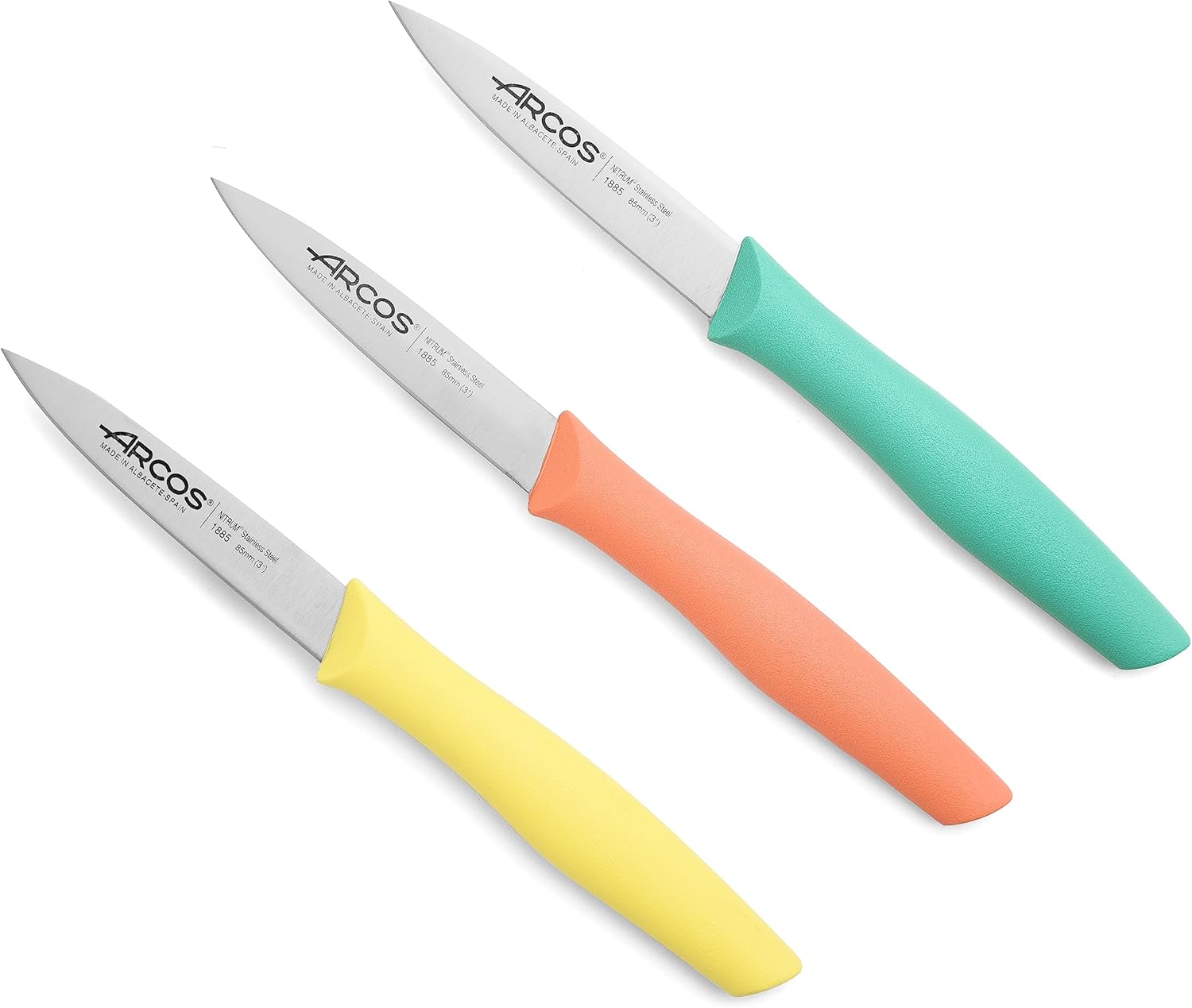
Arcos Paring Knife Set of 3 Pieces 4 Inch Stainless Steel. Colorful Kitchen Knives for Peeling Fruits and Vegetables. Ergonomic Polypropylene Handle. Series Nova. Color Orange, Yellow and Blue.
The size you reach for most after the chef's knife, color coded for raw meat, fruit, and everything else
Three is more than most kitchens need, and no paring knife replaces a chef's knife
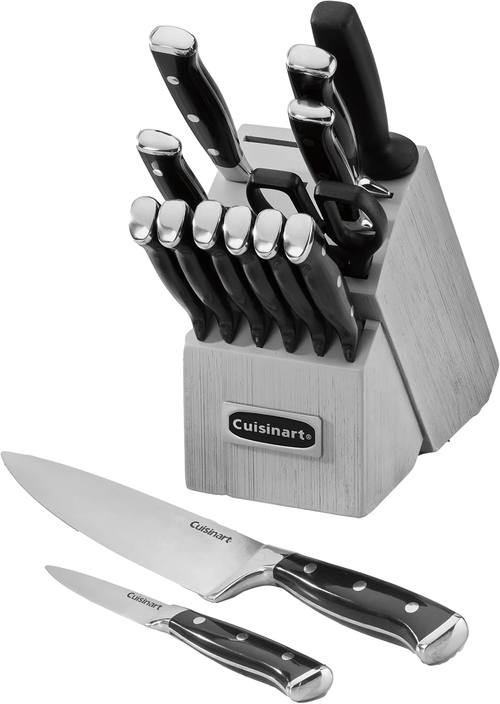
Cuisinart Classic Forged Triple Rivet, 15-Piece Knife Set with Block, Superior High-Carbon Stainless Steel Blades for Precision and Accuracy (Black/Gray)
Forged high-carbon stainless blades, triple rivet handles, and a block that solves storage in one purchase
Fifteen pieces means steak knives padding the count, and a block that can dull an edge on insertion
Prices and availability were captured from Amazon Creators API and may change.
How I judge a knife set
Four questions, in this order. Does the steel hold an edge through a full prep shift? Is the handle still comfortable after 200 cuts? Can I sharpen it on a stone without fighting the bolster? Would I reach for it on a busy Saturday night? Price comes last, because a knife you enjoy using beats an expensive knife that sits in a drawer.
The vocabulary matters more than the marketing copy. Full tang means the steel runs the full length of the handle. A knife without it has a handle bolted or molded onto a blade, and that joint is the first thing to fail. Forged versus stamped is the other divide. Stamped blades are cut from a sheet of steel, which makes them light, thin, and inexpensive. Forged blades are shaped from a heated bar of steel, which usually means a thicker spine, more weight in the hand, and a bolster you can feel between your fingers and the board.
None of that makes stamped steel bad. It makes it a different tool with a shorter working life. A stamped blade in decent steel will take a very sharp edge. It just will not hold that edge as long, and it is not the knife you hand down. If you cut for a living, that gap shows up in week one. If you cook three dinners a week, it shows up in year two.
And the maintenance point, because I will not talk about knives without it: sharpness is a habit, not a purchase. The best knife in the world goes dull. A honing steel realigns an edge that is already sharp, it does not rebuild an edge that is gone. You need both tools, and you need to use them on a schedule.
Cuisinart Classic Forged Triple Rivet 15-Piece: the set that earns counter space
I make fun of knife blocks, and I own one, for guests. So let me be fair about this set. It is forged high-carbon stainless steel with triple rivet handles and a block included, in black and gray, and the construction is the reason it is on this list. Forged blades and riveted handles are the two things I refuse to compromise on, and this set has both at a price that a home cook can actually say yes to.
The honest criticism is the piece count. Fifteen pieces means steak knives and a block are doing some of the counting, and I would rather own six good knives than fifteen average ones. Here is the way to think about it: the chef's knife, the slicer, and the utility knife are the set. The steak knives are a bonus you will use twice a month. If you are furnishing a kitchen from nothing, that trade is fine, because you get a block, a full drawer of shapes, and one purchase that ends the shopping trip.
What it is not is a Japanese knife. Forged steel in this class is softer and tougher than a hard gyuto, which makes it forgiving on chicken bones and easy to bring back on a stone, and it also means it will not hold a glassy, screaming edge the way a harder blade does. I sharpen softer steel more often and I am at peace with that trade, because I would rather touch up a knife than chip one.
The colorful 13-piece set: a starter kit, not a lifeline
This is the set you buy when the budget is real and the knives are non-negotiable. Thirteen pieces, six blade guards included, and handles bright enough to find in a drawer before coffee. The guards matter more than they sound. A knife that lives loose in a drawer with other knives gets its edge knocked off by its neighbors, and blade guards are the cheapest edge protection that exists.
What you get is light stamped blades, comfortable handles, and a full range of shapes: a chef's knife, a slicing knife, a bread knife, utility knives, paring knives. What you do not get is a full tang, heavy steel, or a blade that shrugs off a butternut squash without complaining. Treat it as a first set, a rental kitchen set, a dorm set, or the set that lives in a camper. It will teach you which shapes you actually use, and that lesson is worth more than the set costs. Then buy those two or three shapes properly, in forged steel, and keep this one for backup.
Arcos paring trio: the specialist you will use more than you expect
Nobody's first purchase, everybody's second. Paring knives are the garnish of a knife collection, and I say that with affection, because I use one every single day. Peeling fruit, hulling strawberries, trimming green beans, deveining shrimp, cutting the core out of a tomato: a 4-inch blade does all of it better than a chef's knife, because you can see exactly what you are doing.
The Arcos Nova set gives you three of them, 4-inch stainless steel blades with ergonomic polypropylene handles, in orange, yellow, and blue. The color coding is not a gimmick in a shared kitchen. It is how you keep one knife for fruit, one for raw meat, and one for everything else without stopping to wash between tasks. Polypropylene is the right handle material for a paring knife: it does not care about water, it does not care about being wiped down a hundred times a day, and it will not crack the way a cheap wooden handle does after a season of sink duty.
What it loses is scale. Three paring knives is two more than most kitchens need, and no paring knife on earth replaces a chef's knife. Buy this if you peel and trim a lot, if you cook with kids and want small blades in small hands, or if you want dedicated small knives so you are not washing one every ten minutes during a long prep.
Shapton Kuromaku 1000 and 5000: the purchase that outlasts every knife here
If you take one thing from this article, take this: these stones will still be on your counter when every knife above has been replaced. The Shapton Kuromaku set pairs a 1000-grit stone for the actual work with a 5000-grit stone for polishing, and includes an angle guide for anyone who has never held a blade at a consistent angle. That guide is the difference between a first sharpening session that ends with a sharper knife and one that ends with a scratched blade and a bad attitude.
The 1000-grit stone is the one you will live on. It handles dull edges, small chips, and the weekly touch-up that keeps a knife out of the "I will deal with it later" drawer. The 5000 is for refinement: it does not fix a dull knife, it polishes an edge the 1000 already established. Because these are water stones, they want a soak before use, a flat surface to work on, and a few minutes of air drying afterward, and they will need flattening over time as they dish in the middle. That is the maintenance tax, and paying it once beats paying a sharpening service every few months for the rest of your life.
What it loses is context. It is a real investment next to a starter set, and it is hard to justify if the knives you own are the colorful 13-piece set. Buy the stones when you own at least one knife worth sharpening, which in practice means the day you buy the forged set.
The trade-offs nobody puts on the box
Full tang is not a luxury feature, it is the difference between a knife and a toy. If the steel stops at the handle, the handle is held on by rivets or glue, and that is where a knife breaks, usually mid-service with your knuckles near the blade.
Hardness is a trade, not a score. Harder steel holds a finer edge longer and chips more easily on bones and frozen food. Softer steel gives up the razor edge sooner and takes a beating without complaining. There is no correct number, only a correct match to how you cook.
Block storage has a cost. Sliding a blade into a slot means the edge meets wood or plastic every single time, and over years that dulls a knife as surely as cutting on glass. It is convenient, and I use one, but a magnetic strip or a drawer with blade guards is kinder to an edge.
Piece count is marketing. A 15-piece set and a 13-piece set are not automatically better than a 5-piece set, because steak knives and a bread knife inflate the number without improving your cooking. Count the knives you will use weekly, not the knives in the box.
And finally, a honing steel is not a sharpener. It realigns. If your knife cannot slice a tomato without crushing it, no amount of steel honing will fix it. That is a stone job.
What I would buy, in order
If you own nothing and you cook most nights: the Cuisinart Classic Forged Triple Rivet set, because forged blades and riveted handles are the two things that matter and the block ends the storage problem. Then save for the stones.
If the budget is genuinely tight: the colorful 13-piece set now, and the Shapton stones before you buy another knife. A sharp cheap knife out-cuts a dull expensive one every single service.
If you peel and trim constantly, or you share a kitchen with people who do not wash as they go: the Arcos paring trio, because three color-coded small knives solve more daily problems than most people expect.
If your current knives are dull and you are tempted to replace them: buy the stones first. A $0 sharpening habit on the knives you already own beats a new set with the same bad habit attached.
Final word
The set is the easy part and the stones are the part people skip, which is exactly backwards. Buy the forged set if you want one purchase that covers a home kitchen, buy the starter set if the money is not there yet, add the paring trio when you know what you reach for, and buy the Shapton stones the day you own a blade worth maintaining. Then sharpen on a schedule, hone before every session, and stop storing knives loose in a drawer. That routine is worth more than any set in this comparison.