Most dull knife problems are not knife problems. They are maintenance problems, and the honest fix is usually a stone, a rod, or a guided sharpener rather than another blade. This guide covers the pieces that make up a working knife sharpening kit for a home kitchen: a two-stone water setup, a diamond block set, a combination stone with a base, a guided rod system, a pull-through for speed, and one knife set with a built-in sharpening block for anyone starting with an empty drawer. The scope is narrow on purpose. You will read what each item actually is, what it asks of you, and which one belongs in your kitchen based on how you cook and how much attention you will realistically give an edge.
Related: How to Hone a Knife Without Rounding the Edge
Quick answer
The SHAPTON Ha No Kuromaku Ceramic Whetstone (A-set) Medium Grit (#1000) + Fine Grit (#5000) is the strongest fit for building a real sharpening habit because it pairs a medium stone for setting an edge with a fine stone for refining it, which covers the full progression most kitchen knives need. Choose the DMT Deluxe Diamond Professional Knife Sharpening Kit instead when you want diamond blocks that skip the soaking and can be used on tools well beyond the kitchen.
Knife sharpening tools worth comparing
Sharpening gear splits into four families, and each one solves a different problem. Water stones remove steel slowly and predictably, which is why they are the default for anyone who wants a clean, controllable edge. Diamond blocks cut fast and stay flat, and they do not care whether the blade is a kitchen knife or a mower blade. Combination stones bundle two grits on one brick so you own less hardware. Guided rod systems and pull-through sharpeners trade some edge quality for speed and a lower learning curve, which is a fair trade for a household full of inexpensive knives and scissors. A knife set with a sharpening block is a fifth category: it does not sharpen well, but it gets a new cook cutting on day one.
The six products below are the ones worth putting side by side, ordered with the strongest all-around option first.
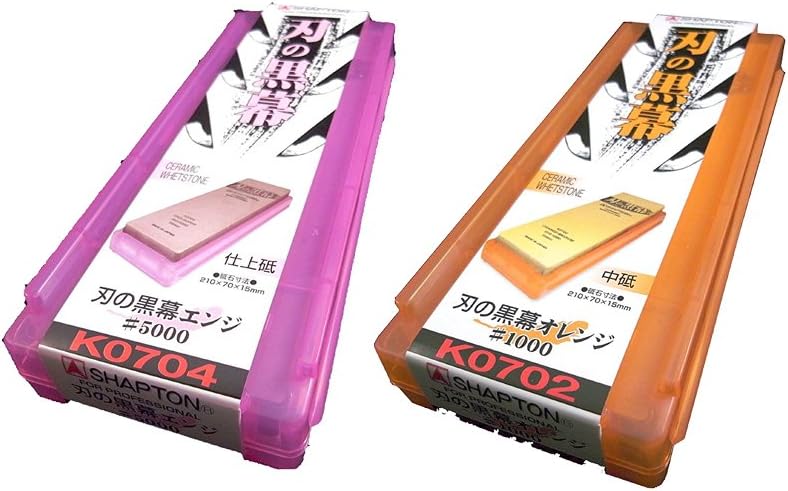
SHAPTON Ha No Kuromaku Ceramic Whetstone (A-set) Medium Grit (#1000) + Fine Grit (#5000)
A two-stone ceramic water stone set pairing a #1000 medium grit with a #5000 fine grit, which covers edge setting and refinement on kitchen knives in one purchase.
Visit on Amazon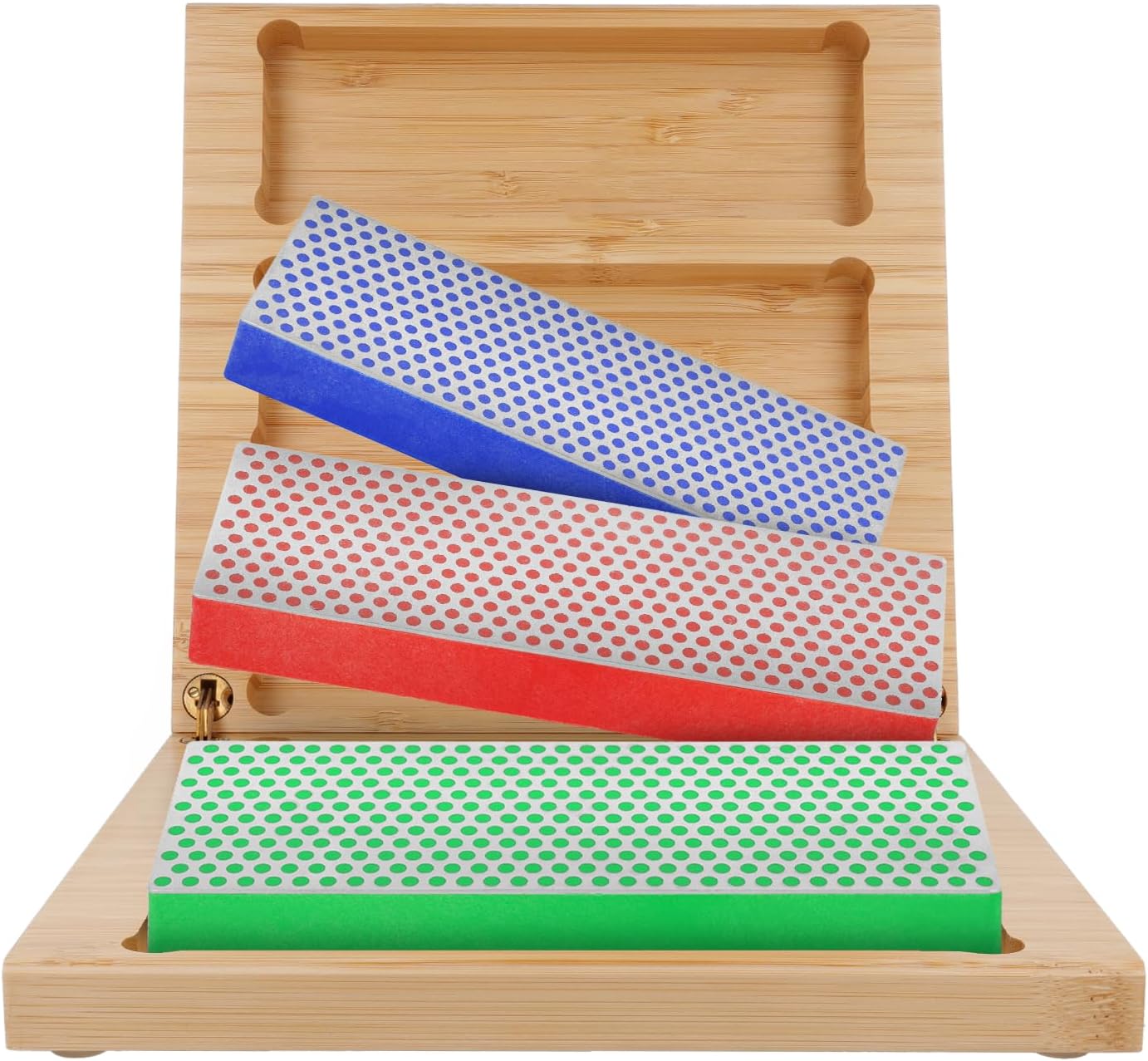
DMT Deluxe Diamond Professional Knife Sharpening Kit - Includes Set of 3 Diamond Whetstone Blocks for Kitchen Knives, Lawn Mower Blades, Hunting/Butchery Tools, and More - Comes in Natural Wood Box
Three diamond whetstone blocks in a natural wood box, described for kitchen knives as well as lawn mower blades and butchery tools. Diamond abrasive, so no soaking required.
Visit on Amazon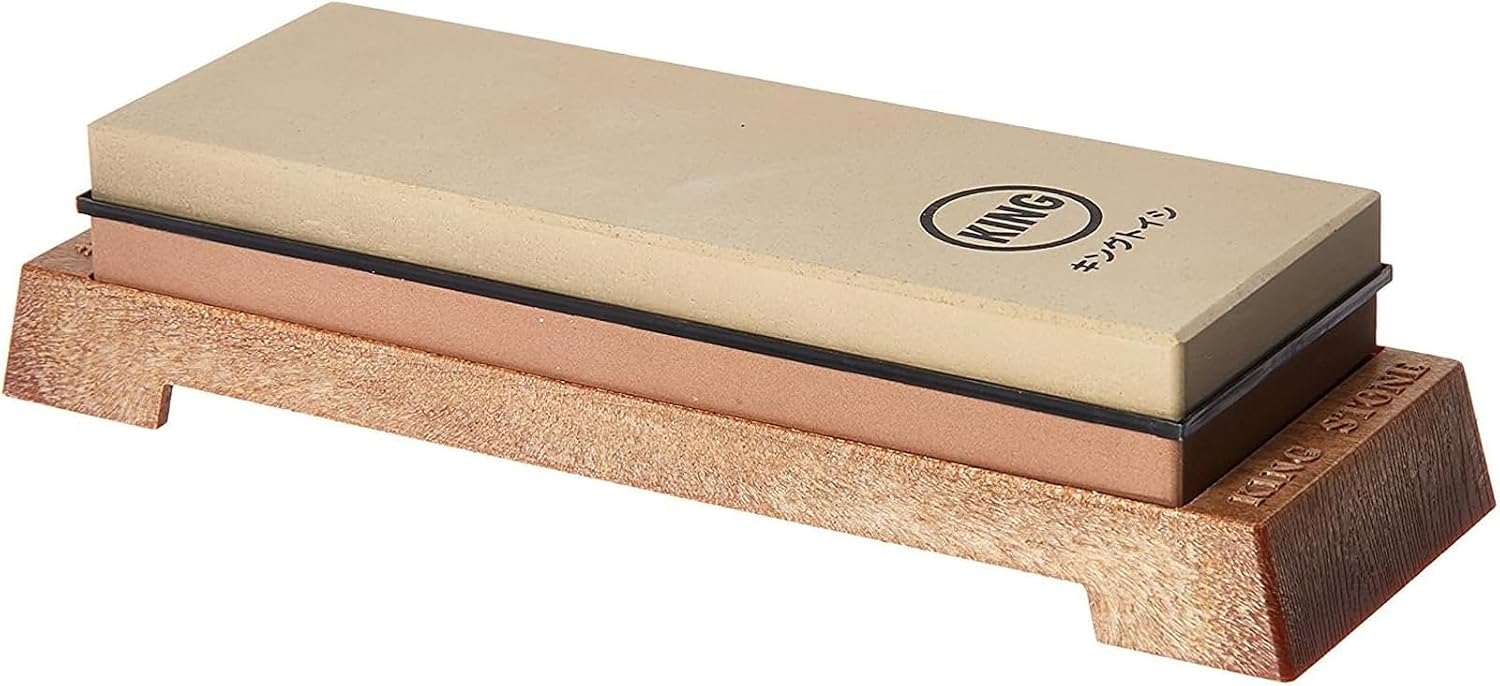
KING KW65 1000/6000 Grit Combination Whetstone with Plastic Base
Check current Amazon price
A single combination water stone with a #1000 side and a #6000 side, sold with a plastic base. One brick covers both maintenance and finishing.
Visit on Amazon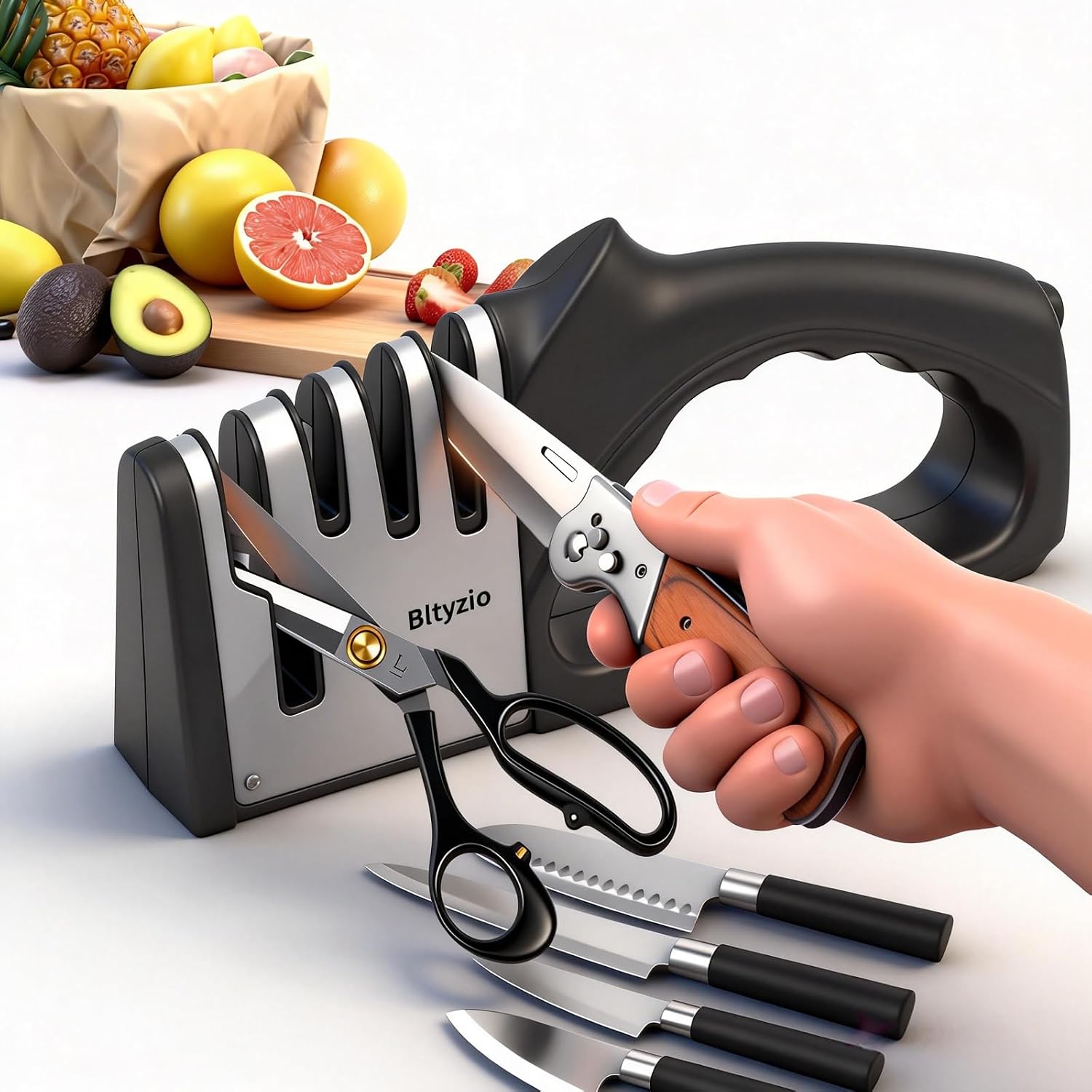
4-in-1 Knife Sharpener for Kitchen Knives & Scissors, Manual Pull Through Sharpener with Tungsten Steel & Ceramic Slots, Professional Kitchen Knife Sharpening Tool with Non-Slip Base
A manual pull-through tool with tungsten steel and ceramic slots plus a scissors position, built on a non-slip base. Speed and simplicity rather than a polished edge.
Visit on Amazon
Lansky Sharpeners Medium Grit Replacement Rod, Turn Box Series Medium, LR5MD
Check current Amazon price
A medium grit replacement rod for the Lansky Turn Box series. A maintenance part for an existing guided system, not a standalone sharpener.
Visit on Amazon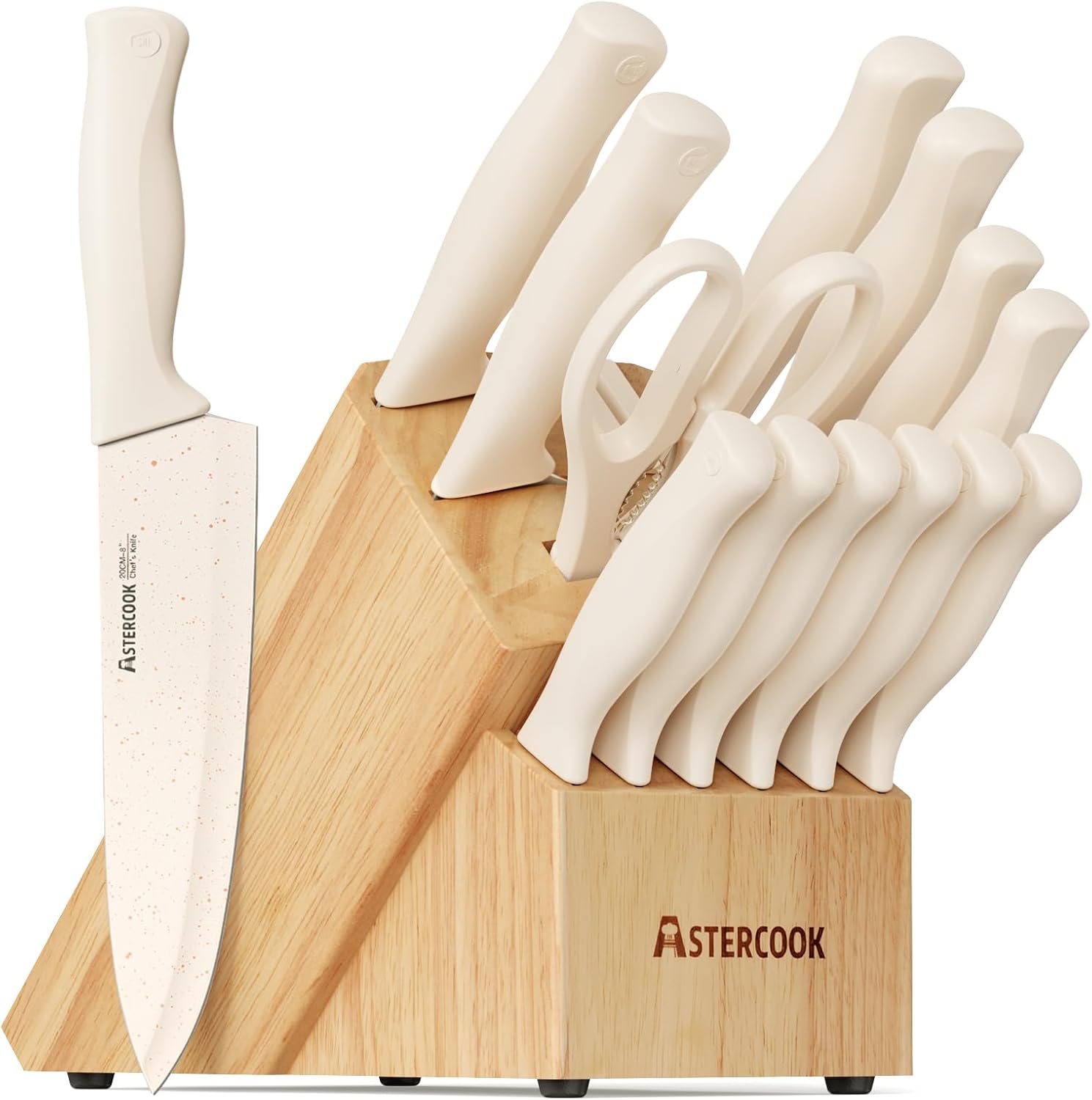
Astercook Knife Set, 15 Pieces Kitchen Knife Set with Sharpener Block, German Stainless Steel Knives with Anti-Rust Coating, Dishwasher Safe, Elegant Cream White Design, Perfect for Holiday Gifts
A 15-piece kitchen knife set in German stainless steel with an anti-rust coating, a cream white finish, and a block that includes a sharpener. Best treated as a starter set for an empty drawer.
Visit on AmazonPrices and availability may change. Check the retailer for current details.
How these products were compared
This guide compares abrasive type, grit range, what the tool demands of the person using it, what kinds of blades and tools it suits, and what comes in the box or base. Product names, images, and retailer links are matched by identifier so that every card points to the product shown.
Abrasive type matters more than brand. Water stones cut slower and leave a cleaner edge, but they need water and periodic flattening. Diamond blocks cut faster, hold their flatness, and work on anything from a paring knife to a mower blade. Pull-through and guided rod tools control the angle for you, which is exactly why they are easier and less precise at the same time. Grit range decides what a tool can do: a medium grit around #1000 sets and maintains an edge, while a fine stone in the #5000 to #6000 range refines it. What the tool demands matters just as much, because the best sharpener is the one you will actually pick up on a Sunday afternoon. None of the notes here are hands-on test results, so treat them as a framework for reading the product listings rather than a scorecard.
How to choose the right sharpening setup
Start with the knives you own and the state they are in. If your blades are simply tired rather than damaged, you need maintenance, not repair: a medium grit stone, used regularly, will bring a kitchen knife back to a working edge, and a fine stone afterward polishes that edge so it slices cleanly through a tomato instead of crushing it. If you have visible chips or you are rehabilitating a neglected block, a coarser abrasive or a diamond block gets you to a fresh edge faster, and you can always refine afterward. Match the grit to normal use rather than an occasional edge case. Buying a coarse stone you use twice a year and a fine stone you use every week is backwards.
Then decide how much skill you want to invest. Freehand water stones, like the two-stone set and the combination stone here, give you the most control and the most durable edge, but they ask you to hold an angle and to keep the stone flat. Diamond blocks are more forgiving because they cut so readily, and they shrug off jobs that would wreck a water stone, including garden tools. Guided systems and pull-through sharpeners take the angle question off the table entirely, which is a real advantage for a household where nobody wants a lesson. If you already own a guided rod system, check which replacement parts it takes before buying anything else, since a medium grit rod is a consumable rather than a new setup. If your drawer is genuinely empty, read our notes on what a starter knife set should actually include before you buy steel and stone in the wrong order.
SHAPTON Ha No Kuromaku Ceramic Whetstone A-set (1000 and 5000 grit)
The A-set pairs a #1000 medium grit ceramic whetstone with a #5000 fine grit stone. That combination is the practical heart of kitchen knife maintenance: the #1000 does the work of establishing and refreshing an edge, and the #5000 refines it for clean slicing. Because the two grits come as separate stones rather than two faces of one brick, you can wear one faster than the other without losing the whole purchase, and you can leave the coarse work to the #1000 while keeping the #5000 for finishing. Ceramic stones in this grit range are the standard recommendation for cooks who want to learn freehand sharpening on something predictable.
The trade-off is that this is a water stone set, which means water, a stable surface, and eventually a flattening routine. The listing describes the two stones, so if you want a base or a holder, plan to supply one separately. It also assumes you are willing to learn an angle, since nothing here locks your wrist in place. If that sounds like a chore rather than a skill worth having, the guided and pull-through options below exist for exactly that reason.
Alternatives to consider
The DMT Deluxe Diamond Professional Knife Sharpening Kit is better suited to a household that sharpens more than kitchen knives, since it ships as three diamond whetstone blocks in a natural wood box and the listing names lawn mower blades and butchery tools alongside kitchen knives. Diamond also means no soaking, which shortens the gap between deciding to sharpen and actually doing it. The KING KW65 1000/6000 Grit Combination Whetstone is a stronger fit when you want one object on the shelf instead of two: it carries a #1000 side and a #6000 side on a single stone and includes a plastic base, which makes it the simplest way to own a full grit progression.
The 4-in-1 Knife Sharpener for Kitchen Knives & Scissors covers speed and versatility, with tungsten steel and ceramic slots plus a scissors position on a non-slip base, and it is the sensible choice for inexpensive knives, kitchen shears, and anyone who will not learn a stone. The Lansky Sharpeners Medium Grit Replacement Rod covers a different need entirely: it is a replacement medium rod for the Turn Box series, so it belongs in the cart only if you already own that guided system. The Astercook Knife Set, 15 Pieces covers the empty drawer, with German stainless steel blades, an anti-rust coating, a cream white finish, and a block that includes a sharpener. Treat the block sharpener as a convenience, not as a replacement for a stone.
Day-to-day use and maintenance
The routine that keeps a kitchen knife working is short. Use a honing steel for realignment between sharpenings, then return to the medium grit stone when the steel stops bringing the edge back. A honing steel is not a sharpener, and no amount of steeling will restore an edge that has already folded or worn away. Water stones need to be soaked before use and kept flat over time, and they should be allowed to air dry before they go back on the shelf rather than being stored damp. Diamond blocks are lower maintenance: rinse and dry them, and skip the soaking step. Pull-through sharpeners need their slots kept clean and will wear out, since the carbide and ceramic cutters dull with use.
Two care notes apply to the whole category. Sharp knives are safer than dull ones because they go where you aim them, so the goal is a maintained edge rather than a razor you are afraid of. And even when a knife set is listed as dishwasher safe, hand washing and immediate drying is the habit that preserves an edge and a finish. Keep fingers clear of any pull-through slot and let the tool do the work rather than forcing the blade.
Buying checklist
- Measure your counter or drawer space before committing to a setup that lives out on the counter.
- Choose grit based on normal use rather than an occasional edge case.
- Confirm that the exact model includes a base, holder, or box if you need one.
- Read the cleaning and maintenance instructions.
- Verify the current retailer price, availability, and return terms.
Final recommendation
Choose the SHAPTON Ha No Kuromaku Ceramic Whetstone (A-set) when you want a complete grit progression and are willing to learn a freehand angle. Choose the DMT Deluxe Diamond Professional Knife Sharpening Kit when you want diamond blocks that need no soaking and can handle tools beyond the kitchen, or the KING KW65 when a single combination stone with a base is the version of this habit you will actually keep. If you are starting with nothing but a bare drawer, pair the Astercook Knife Set, 15 Pieces with a real stone so the block sharpener never becomes the only thing standing between you and a dull blade.