Related: How to Hone a Knife Without Rounding the Edge
Most people build a wooden cutting board setup backwards. They spend three weeks choosing a chef's knife, then grab whatever board is on the clearance rack, then wonder why the edge they paid for is dull by the end of the month. The board is not an accessory. It is the surface your knife lands on several thousand times a week, and it decides how often you have to sharpen.
I have spent 16 years in professional kitchens, six of them on the line and four running a butcher shop, and I have sharpened more knives than most people will ever own. The short version of what that taught me: the board matters, the stone matters, and the cheap knife you keep in a drawer for cardboard matters more than you think, because every time a good knife gets handed a bad job, you pay for it at the stone.
This guide covers four pieces I would put in a home kitchen. A small teak carving board with a juice groove. A heavy reversible walnut butcher block. A diamond lapping plate that keeps your waterstones flat. And a four pack of folding utility knives for the jobs no kitchen knife should touch. None of them are glamorous. All of them are the reason a good edge lasts.
Start here: Teakhaus Carving Board with Juice Groove
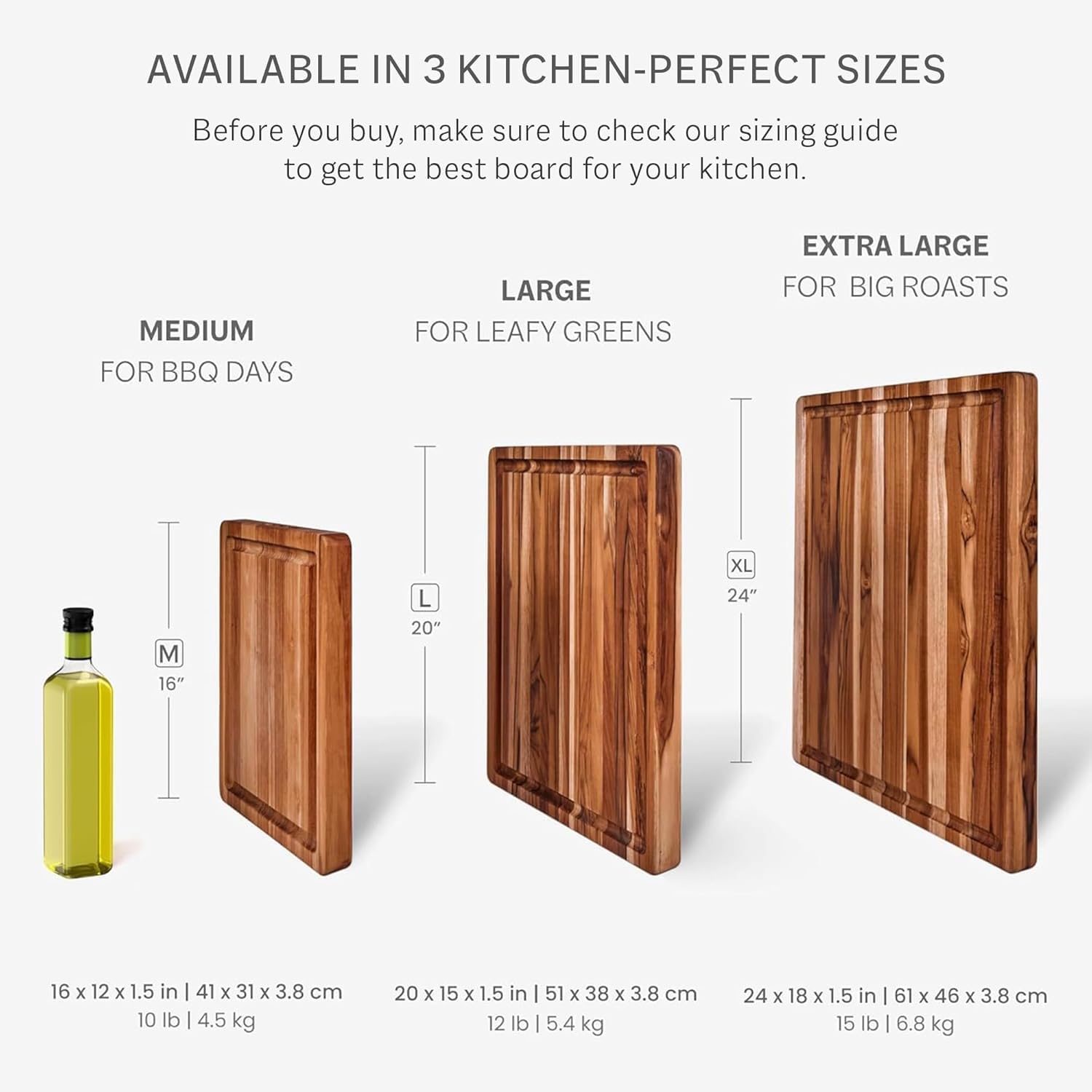
This is the board I would hand a home cook first, and the one I would keep on the counter instead of buried in a cabinet. Teak sits in the useful middle of the hardwood range: hard enough to take a beating from a roast, soft enough that it does not fight your edge the way bamboo or glass does. It also carries its own natural oils, which is why this one arrives with a beeswax oil finish rather than a bare, thirsty surface that needs a week of feeding before you can use it.
The size is the other argument for it. Sixteen inches by twelve, an inch and a half thick, which is small enough to live on a galley counter in a rental apartment and still big enough to break down a chicken or rest a rib roast. The juice groove is what makes it a carving board rather than a cutting board. That channel catches the runoff from a rested roast instead of letting it pool around your potatoes while you are trying to get plates out.
The small version is a compromise and I would rather name it than pretend otherwise. If you are feeding five people and carving a big bird every holiday, you want more surface area. For everyone else, a smaller board you can wash in the sink without a wrestling match beats a huge one that never leaves the counter.
Buy once: John Boos Walnut R-Board
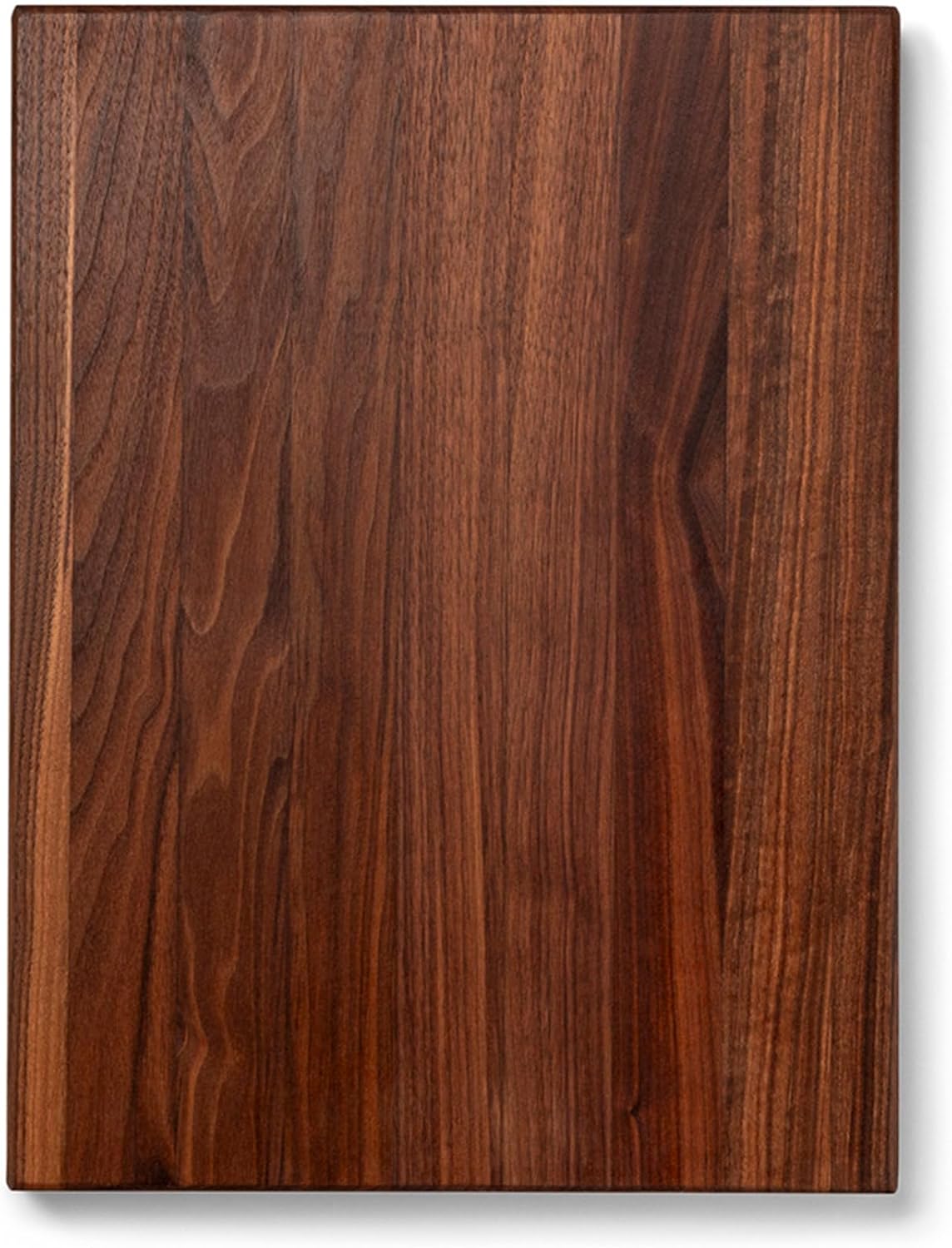
If you want one board and you want it to outlive your kitchen, this is the one. Walnut is softer than maple, which sounds like a downside and is not. A softer board is kinder to your edge, and a kinder board means fewer trips to the stone. Twenty by fifteen inches, an inch and a half thick, twelve pounds, reversible, edge grain, with finger grips cut into the ends so you can actually lift the thing.
Reversible is a bigger deal than the copy on the box suggests. You get two working faces, so you can dedicate one side to raw protein and one to vegetables and bread, or simply flip it when one face starts showing its history. Edge grain construction means the strips run lengthwise along the board, which gives you a stable, flat surface that resists warping better than a glued-up block of the same thickness. And it is made in the USA, which for a lot of buyers is the deciding vote.
The trade-offs are real. Twelve pounds is heavy. That weight is exactly why it stays put while you break down a case of chickens, but it is not a board you tuck behind the toaster when dinner is over. This is the largest single purchase of the four pieces here, and it is the one I would expect to still be flat and usable a decade from now with nothing more than oil and wax.
The tool that keeps the boards working: DMT Dia-Flat Diamond Lapping Plate
Here is the part of a wooden cutting board setup nobody talks about, because it is not about the board at all. Every board you own is only as good as the edge you bring to it, and that edge depends on a flat stone.
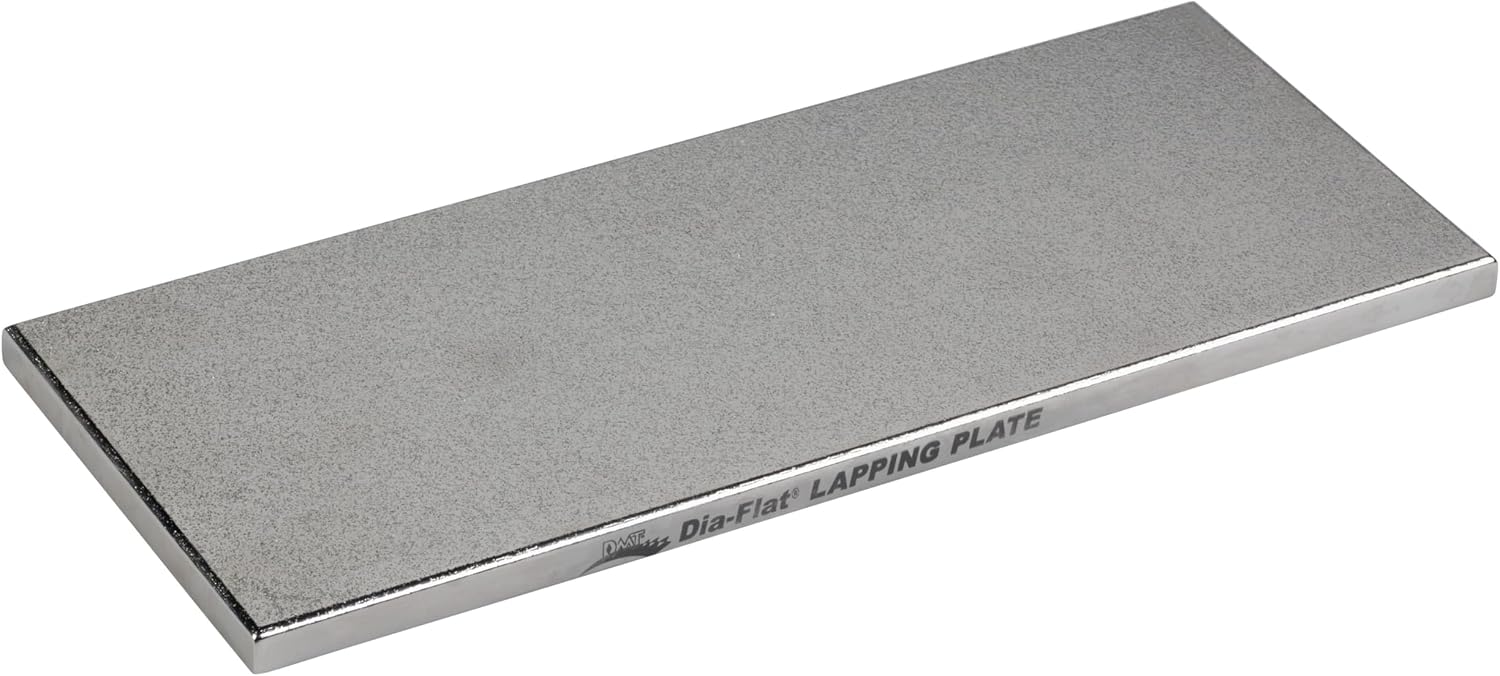
A waterstone dishes out in the middle. You cannot see it at first, but after a few dozen sharpenings the stone has a shallow valley, and a valley means your blade is riding a curve. You think you are holding a 15 degree angle. You are actually rocking through a range of them, which is why the knife that felt sharp off the stone feels tired three days later. The Dia-Flat is a 4 by 10 inch diamond lapping plate, and its entire job is to grind that valley back to flat. A few passes under running water, the pencil grid disappears, the stone is flat, and your angle means something again.
If you sharpen on conventional stones, waterstones, or oil stones, you need one of these or something like it. If you use a pull-through gadget or mail your knives out, you do not. Buy the sharpening habit before you buy the flattening plate, but once you are on stones, this is the tool that makes the habit work. Do not plan on sandpaper on glass forever. It works, it is cheap, it is messy, and the paper loads up in the middle of a session. Diamond is the version that lasts.
The knife that is not a kitchen knife: M MEEPO Folding Utility Knives
Every kitchen needs a knife that is not a kitchen knife. Cardboard from the grocery delivery. Plastic strapping on a case of chicken. The twine on a trussed roast. Every time you hand a gyuto one of those jobs, you are rolling the dice on a chip or a rolled edge, and you will spend twenty minutes at the stone paying for it.
This is a four pack of folding utility knives with ten spare blades. The blades are standard and replaceable, which is the whole point: when one goes dull or gets coated in packing tape adhesive, you swap in a new one instead of sharpening anything. Folding means it closes and lives in a drawer without a sheath. Four of them means one in the kitchen drawer, one in the garage, one in the car, and one to lose.
Two rules. Never use a utility knife on food, and never use it on a cutting board. The blade geometry is wrong for wood, it will gouge the surface, and the blade is not food safe. This is the knife for everything before and after the food, which is exactly why your good knives stay sharp.
How I judge a board before it earns counter space
Edge grain versus end grain. Edge grain is strips glued lengthwise, stable and flat, and it is what both boards here use. End grain is a checkerboard that lets the blade sink between the fibers, and it is gentler on an edge, but it costs more, weighs more, and needs more oil.
Thickness. An inch and a half is the sweet spot. Thinner boards slide and flex. Thicker ones get heavy and expensive without doing more work.
Hardness. Bamboo and glass are edge killers. Teak and walnut are in the friendly range. If a board rings when you tap it, keep your knives away from it.
Reversibility and grips. Two usable faces double the life of the board. Finger grips mean you can lift it without scraping your knuckles on the counter.
The juice groove. Only matters if you carve meat. If you do, you want it, because a pool of juices around a resting roast is a mess you clean twice.
Maintenance. Wood needs oil and wax, not the dishwasher. A board that goes in the dishwasher is a board that will crack, and no finish survives that.
What the four pieces actually add up to
The order matters more than the products. A board is the first thing to get right, because it is the surface that decides how fast your edge degrades. The flattening plate is second, because a dished stone quietly undoes every sharpening session you put in. The utility knives are third, and they are the cheapest insurance in the drawer.
There is a version of this where you buy the walnut board, the Dia-Flat, and a box of utility blades, and you never think about your edge again except on sharpening day. There is another version where you are cooking in a small apartment, you carve a chicken once a month, and the teak board plus the utility knives is the entire kit you need. Both are correct. What is not correct is buying a nice knife, cutting on a glass board, and blaming the steel.
Sharpness is a maintenance habit, not a purchase. The best knife in the world goes dull. What keeps it alive is a board that does not abuse it, a stone that stays flat, and the discipline to keep the dirty jobs away from the good blade.
The reference table
| Piece | Best for | What matters | Price |
|---|---|---|---|
 Visit on Amazon → Teakhaus Carving Board |
Small kitchens, carving meat | Juice groove, teak, FSC certified, beeswax finish | Check current Amazon price |
 Visit on Amazon → John Boos Walnut R-Board |
One board for a decade | Reversible, edge grain, finger grips, made in the USA | $233.95 |
 Visit on Amazon → DMT Dia-Flat Lapping Plate |
Anyone sharpening on stones | Flattens dished waterstones and oil stones | $229.86 |
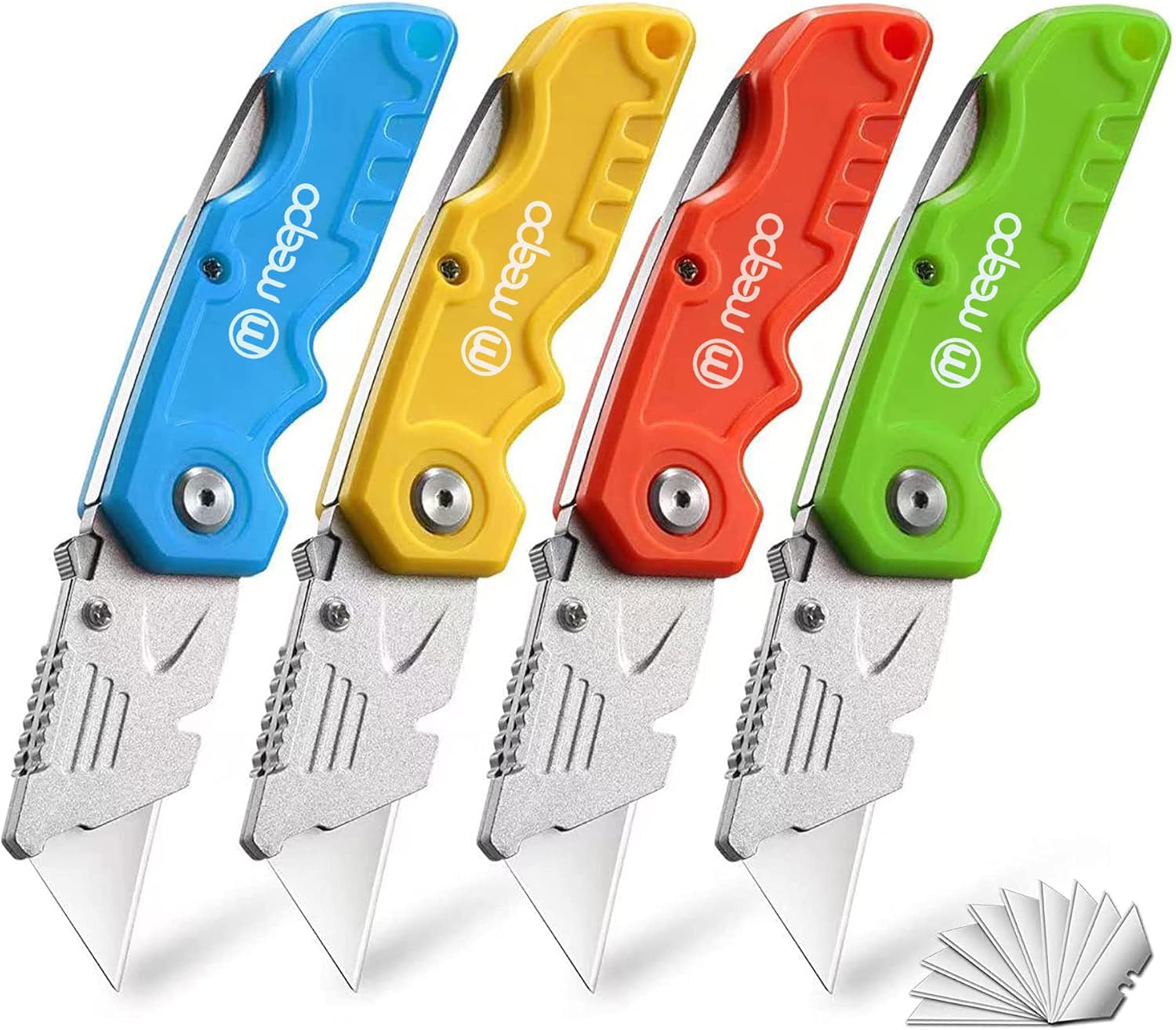 Visit on Amazon → M MEEPO Folding Utility Knives |
Cardboard, strapping, twine | Four knives, ten spare blades, folding | $9.99 |
Should you buy the Teakhaus Carving Board?
Yes, if you cook in a normal-sized kitchen and you carve meat more than once a month. The juice groove earns its place the first time you rest a roast on it, and the small footprint means it actually gets used instead of living in a cabinet. Teak is a sensible middle ground for edge retention, and the beeswax oil finish means it is ready to work on day one. Skip it only if you are carving a very large bird every holiday, in which case you want more surface.
Should you buy the John Boos Walnut R-Board?
Yes, if you want to buy one board and stop shopping. Walnut is gentler on an edge than maple, the edge grain build stays flat, and the reversible design gives you two working faces plus finger grips. It is heavy at twelve pounds, and it is the biggest investment of the four pieces here. In exchange, you get the board that stays on the counter and outlives the knife sitting on it.
Should you buy the DMT Dia-Flat?
Only if you sharpen on stones. If you do, this is the piece that makes the rest of your sharpening worth the time, because a dished waterstone hands you an inconsistent angle no matter how steady your hands are. If you use a pull-through sharpener or send knives out, put the money into a stone first and come back for this later.
Should you buy the M MEEPO folding utility knives?
Yes, as the beater knife your kitchen has been missing. Four folding knives with ten spare blades means cardboard, strapping, and twine never touch your gyuto again, and a dull blade gets swapped instead of sharpened. Keep one in the drawer, one in the garage, one in the car. Never on food, never on the board.