Related: How to Sharpen a Kitchen Knife on a Stone Without Rounding the Tip
I have spent 16 years in professional kitchens, six of them on the line in fine dining and four running a butcher shop, and I have sharpened more knives than most people will ever own. So when someone asks me which kitchen knife sets are worth buying, I do not start with the piece count on the box. I start with the chef's knife inside it, because a set is roughly 80 percent chef's knife and the rest is garnish.
The honest version of my advice is short. You need one good chef's knife, one small knife, and a sharpening habit. Everything past that is convenience. But convenience matters in a working kitchen, and the four sets here cover the whole range: a compact three-piece starter that lives in a drawer, a single small chef's knife for small hands or small counters, a dishwasher-friendly set for a shared house, and a 16-piece Japanese-style set with a block for someone outfitting a kitchen from zero.
Every set below gets judged the same way, with the four questions I ask about any blade. Does it hold an edge through a full prep shift. Is the handle comfortable after 200 cuts. Can I sharpen it on a stone without fighting the bolster. Would I reach for it on a busy Saturday night. A knife that fails the first question does not get a second chance, no matter how good it looks in a block.
One thing before we start. None of this matters without maintenance. A honing steel is a realignment tool, not a sharpener, and yes, you need both. If you take nothing else from this guide, take that.
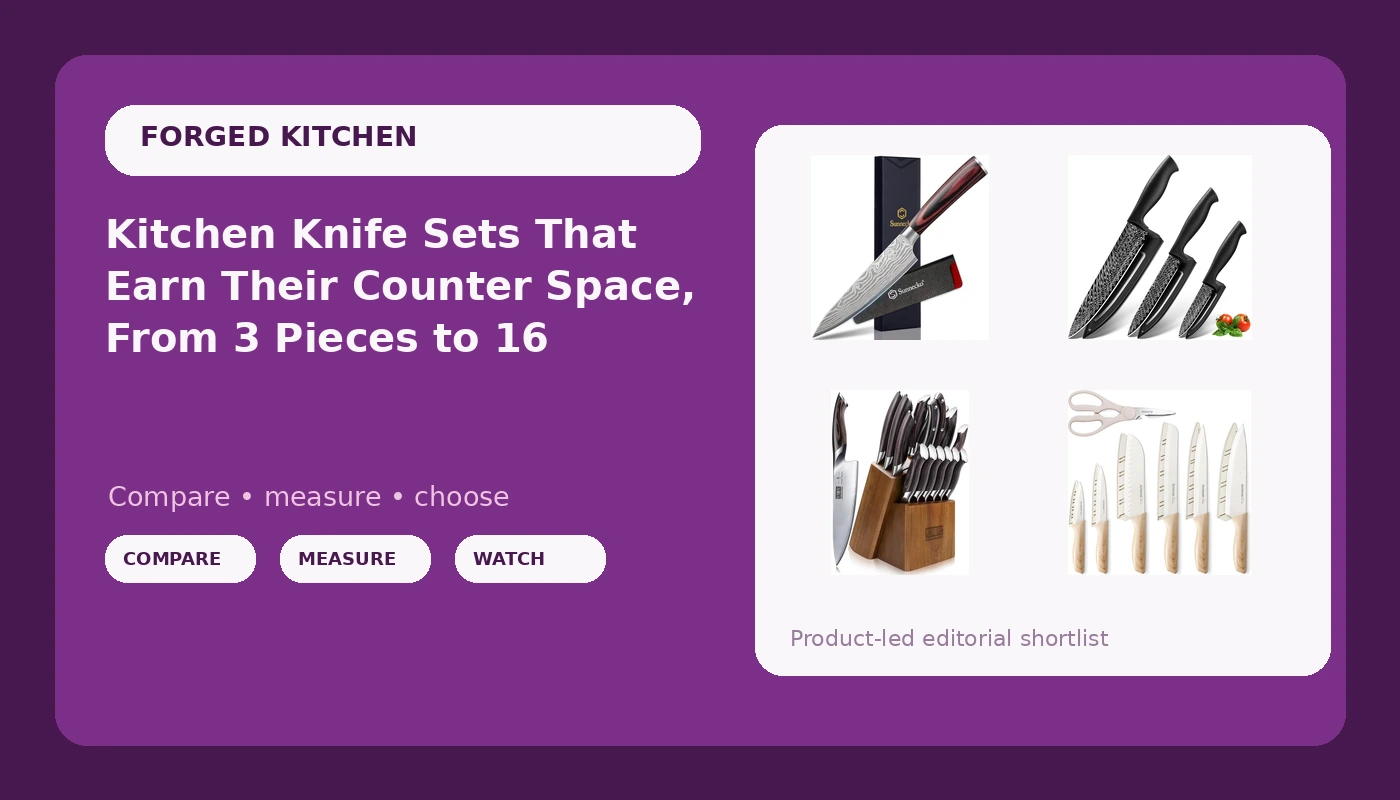
Best Overall: HOSHANHO 16PCS Knife Set, Ultra Sharp Japanese Kitchen Knife Set with Block
If you are starting from an empty drawer and you want one purchase to cover everything, this is the set that makes the most sense. Sixteen pieces with a block means the knives have a home, and that matters more than people admit. A knife that lives loose in a drawer gets its edge knocked around every time the drawer opens.
The Japanese-style geometry is the reason to care. Blades in this profile run thinner behind the edge than the German profiles most people grew up with, which is why they glide through onions, protein, and anything you slice rather than split. The trade is durability at the edge. Thin, hard edges do not enjoy chicken bones, frozen food, or a butternut squash you attack with your whole body weight. Keep a heavier knife for that work and let this set do the actual cooking.
The block deserves a hard look before you give it counter space. A block that lets the edge rest against wood is a slow dulling machine. Set the knives in their slots and check that nothing touches the cutting edge.
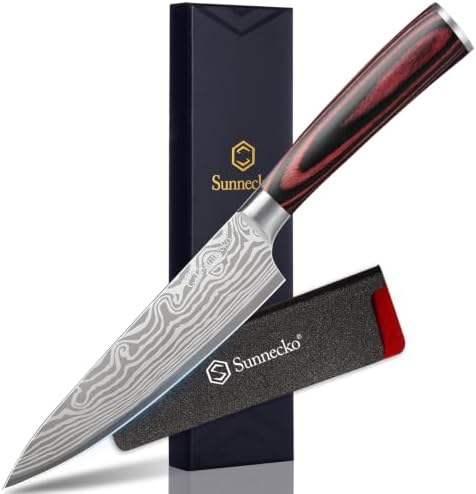
Best Budget Starter: Gourmetop 3PCS Kitchen Knife Set with Cover
Three pieces with a cover, and this is the set I would hand to someone moving into a first apartment or a dorm, or to anyone who wants a second set for a camper, a cabin, or a desk drawer at work. The cover is the quiet win. It protects the edges in storage, and it means you can carry the set without wrapping it in a dish towel.
Stamped steel is not bad steel. It is just not a knife you will hand to your grandkids. What you get at this level is a functional cutting tool that will do real work on vegetables and protein, and what you give up is edge retention. Expect to sharpen more often, and expect this to be a starter rather than a destination.
That is a fair trade for a lot of people. If the choice is between an inexpensive set you actually use and a beautiful knife you are afraid to scratch, buy the set you will use and learn to sharpen on it. You will not wince when you make a mistake on a stone, and you will learn faster because of it.
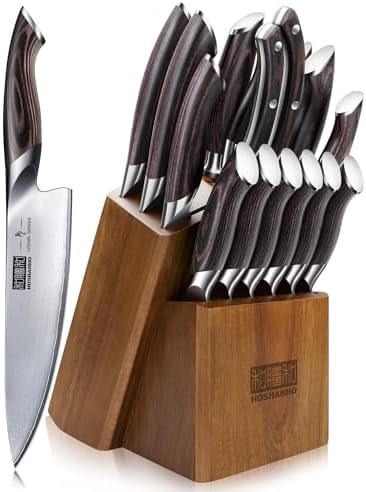
Best Single Knife: Sunnecko 5.5 Inch Small Chef Knife
If you are going to buy one knife instead of a set, buy a chef's knife, and this is the compact version of that idea. At 5.5 inches it sits between a petty and a full chef's knife, which makes it the blade I would hand to someone with small hands, a small kitchen, or a cutting board the size of a laptop.
The 12 to 15 degree edge is a slicing edge, and you feel the difference on protein and soft vegetables. It is also thinner than most people are used to, so treat it like a precision tool. No bones, no frozen blocks, no scraping food off the board with the edge. The included sheath means it can live in a drawer without a guard and travel without a case.
High carbon stainless needs a towel. Wash it, dry it immediately, put it away dry. That habit costs 15 seconds and saves you from the spotting that makes people think their knife is ruined.
As a gift, this is the safest pick of the four. It is a real knife with a real edge, it arrives with a sheath, and it does not ask the recipient to reorganize their kitchen around a block.
Best for Shared Kitchens: Astercook 13-Piece Knife Set with Ceramic Coating
This is the set for the house where knives go in the dishwasher no matter what anyone says. The ceramic coating is the headline, and it earns its place. A coated blade releases sticky food, so potatoes, garlic, and cheese do not cling the way they do to bare steel. Six blade guards keep the edges from banging into each other in a drawer, and the wood grain handle means the set still looks like it belongs on a counter.
Two honest notes. Dishwasher heat and detergent are hard on any edge, coated or not, and hard on handles over time. And coatings wear. A coated knife is a working tool, not an heirloom, so judge it that way.
I have said before that most big sets are a block, four steak knives, and a bread knife you will never use. This one sidesteps part of that problem by skipping the block entirely and giving you guards instead, which is the smarter storage choice for a drawer.
How I judge a knife set
I do not judge a set from a photo. The criteria are the same ones I use on the line.
Steel and geometry first. A knife that will not take an edge is a spatula. I want a blade that comes back to sharp with a few passes on a stone and holds through a prep shift of onions, peppers, and protein.
Handle comfort second. Two hundred cuts tells you what a five-minute grip test cannot. A handle that feels fine for one onion will blister you by the third quart of diced peppers. Full tang matters here. The steel running the full length of the handle is the difference between a knife and a toy, and a bolted handle is a knife that will fail you mid-service.
Sharpening access third. A bolster that runs the full height of the blade is comfortable for your hand and miserable for your stone. If you cannot lay the whole edge flat, you will either learn to sharpen around it or you will pay someone else to do it.
Useful pieces fourth. Count the knives you will actually touch in a week. For most people that is a chef's knife, a paring or petty knife, and a serrated knife that can actually slice bread. Everything else is either a steak knife or a decoration.
Storage last. A block, a magnetic strip, a sheath, or a guard all work. What does not work is a bare blade rattling against five other bare blades in a drawer.
What the specs actually mean
Edge angle tells you how a knife wants to be used. A 12 to 15 degree edge is thin and slicing-oriented, which is why it feels so good on tomatoes and raw protein and why it is the wrong tool for hacking through a chicken carcass. Wider angles trade some of that glide for durability.
A ceramic coating is about release, not sharpness. It keeps food from sticking and shields the steel from the acids in onions and tomatoes. It does not make a knife hold an edge longer, and it can wear with heavy use or repeated dishwasher cycles.
Piece count is marketing until you read the list. Six steak knives in a 16-piece set means you are really buying ten knives and a block. That is not a scam, but it is worth knowing before you pay for a number instead of a tool.
A cover or a guard is the cheapest upgrade in your kitchen. It costs the maker almost nothing, and it protects the one thing you cannot fix at home, which is an edge chipped against a drawer divider.
And the rule that applies to all four sets: a honing steel realigns an edge, a stone sharpens it, and neither works if you only use it twice a year. Ten passes on the steel before you cook, a stone session every few weeks for a home cook, and any of these knives will outcut an expensive set that never gets touched.
Kitchen knife set reference table
This is the table I keep when I compare sets. Same columns every time, because the comparison only works if the categories stay fixed.
| Set | Pieces | Edge and steel | Storage | Best for | Price |
|---|---|---|---|---|---|
 Visit on Amazon → HOSHANHO 16-piece Japanese set |
16 | Japanese-style, ultra sharp | Block | Outfitting a kitchen from zero | $428.99 |
 Visit on Amazon → Sunnecko 5.5 inch small chef knife |
1 with sheath | High carbon stainless, 12 to 15 degree edge | Sheath | Small hands, small counters, one-knife cooks | $35.99 |
 Visit on Amazon → Gourmetop 3-piece set |
3 with cover | Sharp black blades | Cover | First apartment, dorm, camper, backup | $7.89 |
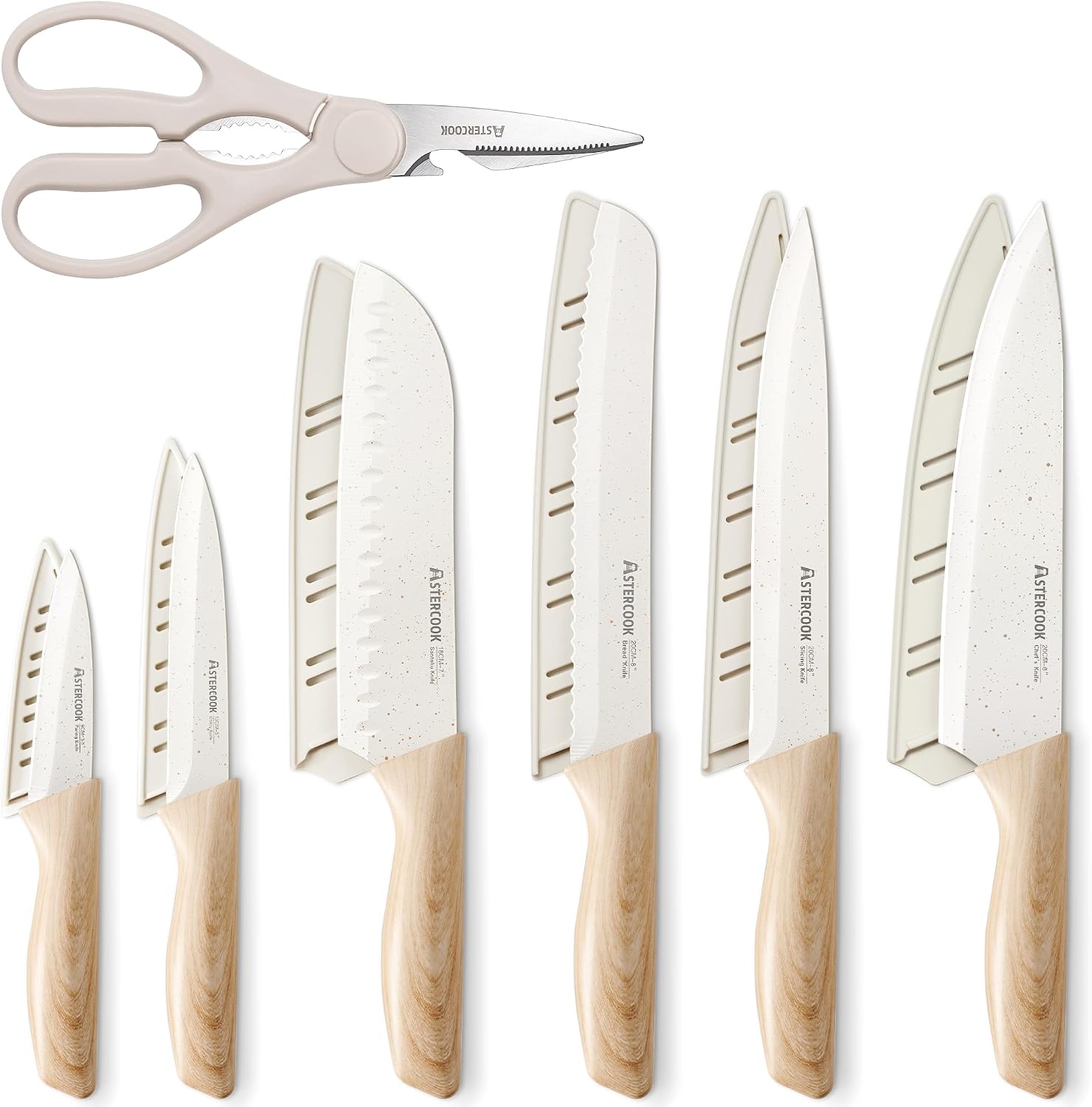 Visit on Amazon → Astercook 13-piece set |
13 with 6 guards | Ceramic-coated stainless, dishwasher safe | Blade guards | Shared kitchens and busy households | $24.99 |
The column that matters most is the second to last. Not the piece count, not the coating, but who the set is for. Buy the set that matches your kitchen, not the one with the biggest number on the box.
Should you buy the HOSHANHO 16-piece set?
Yes, if you are starting from an empty drawer. Sixteen pieces with a block covers a full kitchen in one purchase, and the Japanese-style geometry slices better than anything in its class once you learn to respect the edge.
Keep it away from bones, frozen food, and winter squash. Check that the block slots are not touching the cutting edges. Then learn to sharpen it, because thin, hard edges reward maintenance more than they reward money.
Should you buy the Gourmetop 3-piece set?
For a first apartment, a dorm room, a camper, or a backup drawer, yes. The cover protects the edges, the set is easy to carry, and it will cut real food on day one.
Just go in knowing what it is. Stamped steel does not hold an edge like a forged blade, so you will sharpen more often and you will eventually replace it. For a lot of people, that is exactly the right place to start.
Should you buy the Sunnecko 5.5 inch small chef knife?
If you want one knife instead of a set, yes. It is a real chef's knife in a compact size, the 12 to 15 degree edge slices protein and soft vegetables beautifully, and the sheath makes it easy to store or travel with.
Dry it immediately after washing, keep it off bones, and it will serve you for years. It is also the gift I would trust most of the four, because it does not require the recipient to change how they organize their kitchen.
Should you buy the Astercook 13-piece set?
If your house puts knives in the dishwasher no matter what anyone says, yes. The ceramic coating releases sticky food, the six blade guards protect the edges in a drawer, and the set skips the block that dulls blades in the first place.
Be honest about the trade. Dishwasher cycles are hard on edges and handles, and coatings wear with time. Treat this as a working set for a busy household, not as the last knife purchase you will ever make.