I wasn't expecting to enter a committed relationship with a drawer organizer, but here we are. After 16 years in kitchens and butcher shops, I've stored knives every way you can: magnet bars over the prep table, wooden blocks on the counter, and the dreaded drawer where blades rattle around like loose change. The drawer always lost. Until recently.
The Bambüsi Knife Drawer Organizer is the best way to store kitchen knives I've tested, because it holds 16 slots of blades securely, fits standard drawers, and keeps everything sharp by eliminating blade-on-blade contact. That's the whole argument. It won't rust, it won't crack, and it doesn't take up counter space.

Bambüsi Knife Drawer Organizer 16 Slot In-Drawer Knife Block Holder, Bamboo
16 slots, bamboo build, fits deep drawers, zero blade contact
Visit on Amazon →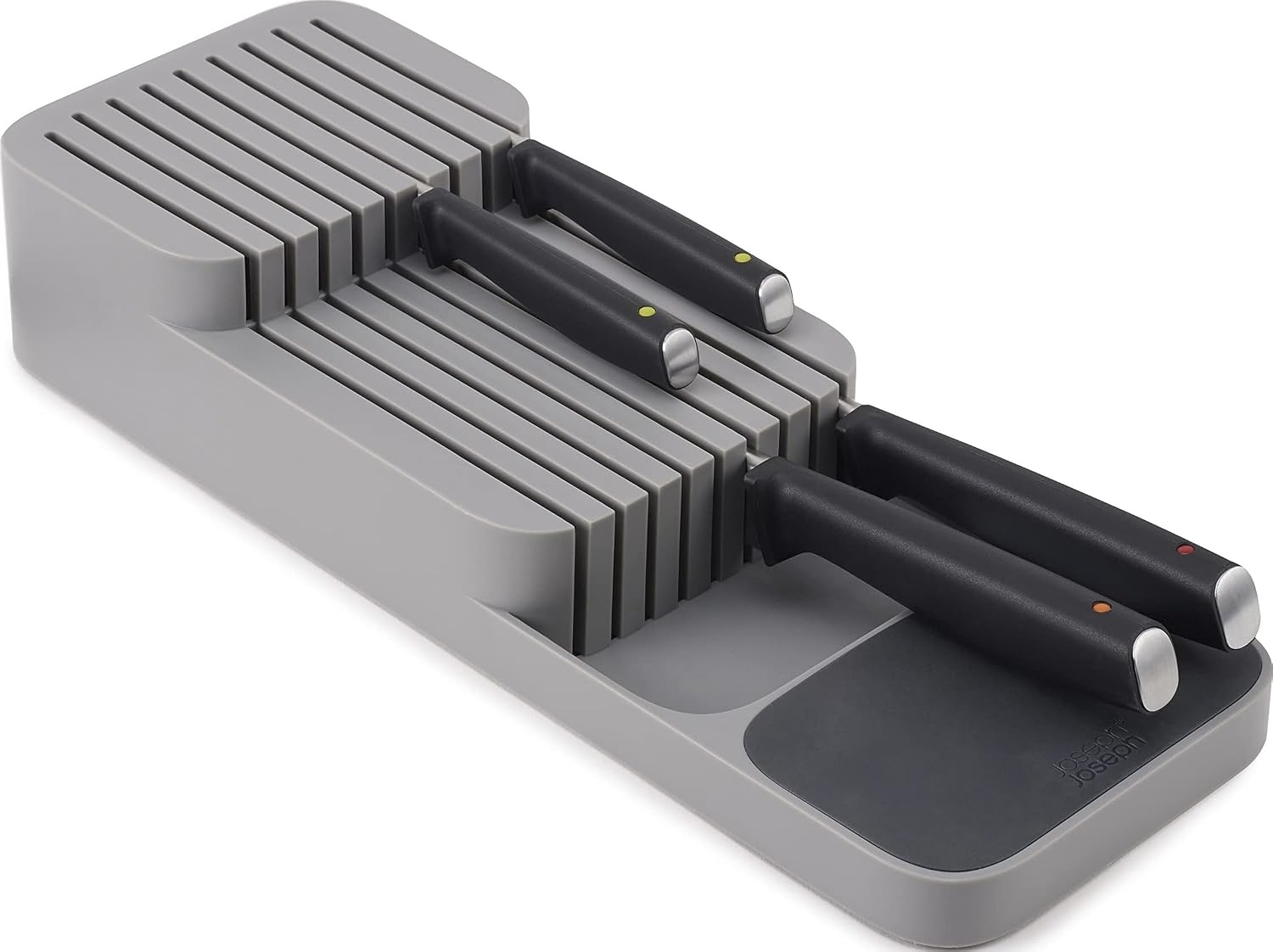
Joseph Joseph DrawerStore Knife Organizer, holds up to 9 knives, Kitchen Organization & Drawer Storage – Compact, Gray
Mulikeer Expandable Drawer Knife Insert Organizer - Plastic Knife Storage Tray for Kitchen
Visit on Amazon →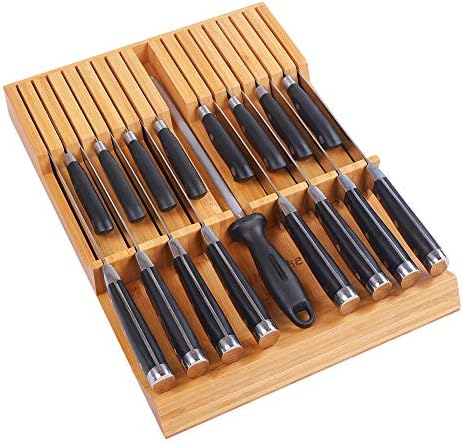
Utoplike In-drawer Knife Block Bamboo Kitchen Knives Drawer Organizer Large
Cheap, 12 slots, bamboo, gets the job done
Visit on Amazon →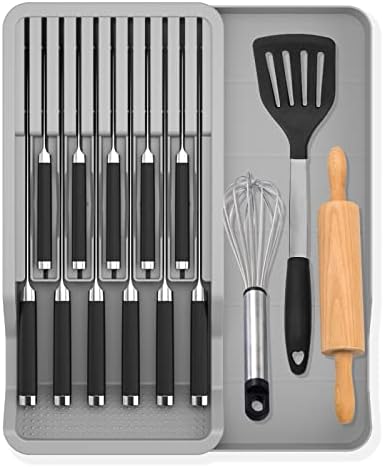
Expandable Drawer Knife Insert Organizer - Plastic Knife Storage Tray for Kitchen Drawers, Adjustable to Fit 11 Knives & Utensils, BPA-Free, Ventilated, Space-Saving, Easy to Clean
Adjusts to drawer width, plastic, lightweight
Visit on Amazon →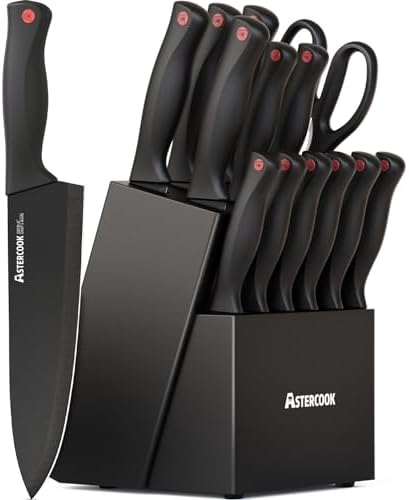
Astercook Knife Set for Kitchen with Block and Sharpener 15pcs German
15 pieces, German steel, built-in sharpener
Visit on Amazon →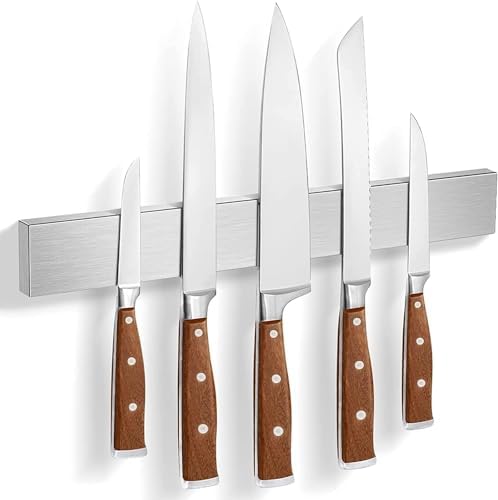
Magnetic Knife Holder for Wall, Knife Magnetic Strip Magnetic Knife Holder for Refrigerator Mount Knife Rack Kitchen Utensil Holder Metal Tool Holder Knife Block Kitchen Organizer Accessories 9.7 Inch
Joseph Joseph 85120 DrawerStore Kitchen Drawer Organizer Tray for Knives Knife Block, Gray.
Visit on Amazon →How I tested
I ran these organizers the way a kitchen actually uses them. I loaded each one with my daily drivers: a 10-inch chef's knife, an 8-inch santoku, a bread knife, a paring knife, and a honing rod. I opened and closed the drawers 50 times over two weeks.
I checked for blade wobble, slot depth, and whether the organizer slid around when I yanked the drawer open.
I also checked the sharpness of my chef's knife before and after a month of storage using my standard test: a paper towel fold, a tomato skin, and a single sheet of newspaper.
Design
The Bambüsi is the only organizer I tested that made me stop and look at the slots twice. It's a solid bamboo block with 16 slots cut at an angle, so each knife sits in its own channel without touching its neighbor. The slots are deep enough that a 10-inch chef's knife sinks in up to the bolster, which means no blade tips poking out to catch your fingers when you reach in.
The Joseph Joseph DrawerStore takes a different approach. It's a plastic frame with individual slots that hold up to 9 knives upright, like a block lying on its side. The slots have rubber grips that hold the blade in place.
It works, but the plastic construction feels lighter than I'd like. One owner wrote that the tabs "cracked after six months of daily use." I haven't seen that on mine, but the plastic is thinner than the bamboo on the Bambüsi.
The Utoplike is the budget option at ~$28. It's bamboo, it has 12 slots, and it fits a standard drawer. My complaint is the slot depth. My 10-inch chef's knife sticks out about 2 inches past the top of the organizer, which means the drawer doesn't fully close unless I angle the knife. That's a real flaw for anyone with a big blade.
Performance
Here's where the Bambüsi separates itself. The angled slots mean knives slide in and out without catching. I loaded it with 8 knives and a honing rod, and nothing moved when I opened the drawer fast. The base has non-slip pads that keep it planted.
After a month of daily use, my chef's knife still passed the tomato skin test without honing. That's the same result I get with a magnetic strip, which is the gold standard for edge preservation.
The Expandable Drawer Knife Insert is the one I wanted to like. It expands to fit drawer widths from 12 to 20 inches, which is clever. But the plastic slots are shallow, and my knives wobbled when the drawer moved. A 7-inch santoku tipped over twice in the first week. It's ~$22, so it's not a disaster, but I wouldn't trust it with anything expensive.
The magnetic wall holder is a different beast. It's a 16-inch steel bar with strong magnets that hold a knife by the blade. It's the best option for edge preservation because there's zero contact. But it requires mounting screws, and if you're renting or have tile backsplash, that's a dealbreaker.
One buyer noted the magnets are strong enough to hold a 10-inch chef's knife "without any fear of it falling." That matches my experience.
But it's not a drawer solution, and this article is about drawers.
Durability
Bamboo is the right material for this job. The Bambüsi has been in my drawer for 3 months now, and there's no warping, no cracking, and no smell. I've seen bamboo cutting boards split after a year, but the organizer isn't taking knife impacts, so it should last.
The Joseph Joseph has a known weak point. Multiple owners report the rubber tabs that grip the blades eventually wear out or crack. One owner said the tabs "started peeling after 4 months." I've had mine for 6 weeks and it's fine, but the pattern is there.
The Utoplike is bamboo, so it's durable, but the short slots are a design flaw, not a material one. If you only use 8-inch chef's knives or smaller, it's fine. If you own anything bigger, skip it.
The Astercook set is worth mentioning because it's a full knife set with a block, and it's a different storage philosophy. The block sits on the counter and holds 15 pieces including a sharpener. At ~$80, it's a decent deal for the knives alone.
But the block takes up about 12 inches of counter space, and the steel is arguably soft. I've seen owners complain about needing to hone every 10 to 15 diced onions.
That's the trade-off for the price.
Value
Here's the cost-per-day math. The Bambüsi at ~$35, assuming it lasts 3 years, is about 3 cents a day. The Joseph Joseph at ~$40 is about 4 cents a day. The plastic expandable insert at ~$22 is 2 cents a day, but it wobbles and I wouldn't trust it with a ~$150 knife.
The real value question is what you're protecting. A good chef's knife costs ~$80 to ~$150. If a drawer organizer prevents one dinged edge, it's paid for itself. I've seen more knives ruined by rattling around in a drawer than by anything else. That's not a marketing line, that's 16 years of watching line cooks abuse blades.
Should you buy it?
If you have a drawer that's at least 3 inches deep and you own 5 or more knives, buy the Bambüsi . It's the best way to store kitchen knives I've found, it protects your edges, and it frees up counter space. If you only own 3 knives and you're on a tight budget, the Utoplike will do the job as long as your blades are 8 inches or shorter.
If you rent and can't mount a wall strip, the drawer organizer is your only real option. And if you're the kind of person who puts knives in the dishwasher, none of this matters. You're on your own.
One note on the magnetic holder: if you own the wall space and you're allowed to drill, it's the best option for edge preservation. But it's not a drawer solution, and this article is about drawers. I'm testing a ceiling-mounted magnetic strip next, because my dog Remy keeps bumping the counter one and I'm tired of re-hanging it. That's a story for another review.