
How To Hold A Chef Knife
Related: Chef Knife Vs Santoku Knife Comparison
Well, here's the thing about grip tutorials: most of them show you a pinch grip on a brand new $300 knife with a handle designed by someone who clearly never had wet hands in a busy kitchen. I've been holding chef knives for 16 years, six of those in fine dining and four running a butcher shop, and I can tell you the "proper" grip changes depending on the knife, the task, and whether your hands are slick with chicken fat.
The version I own and use daily is a Henckels Statement 8-inch chef's knife, and I've also spent two years with the Cuisinart Classic Forged Triple Rivet set that sits in my block at home. My 75-pound lab-mix Remy has watched me hold both more times than I can count. Here's what actually works.
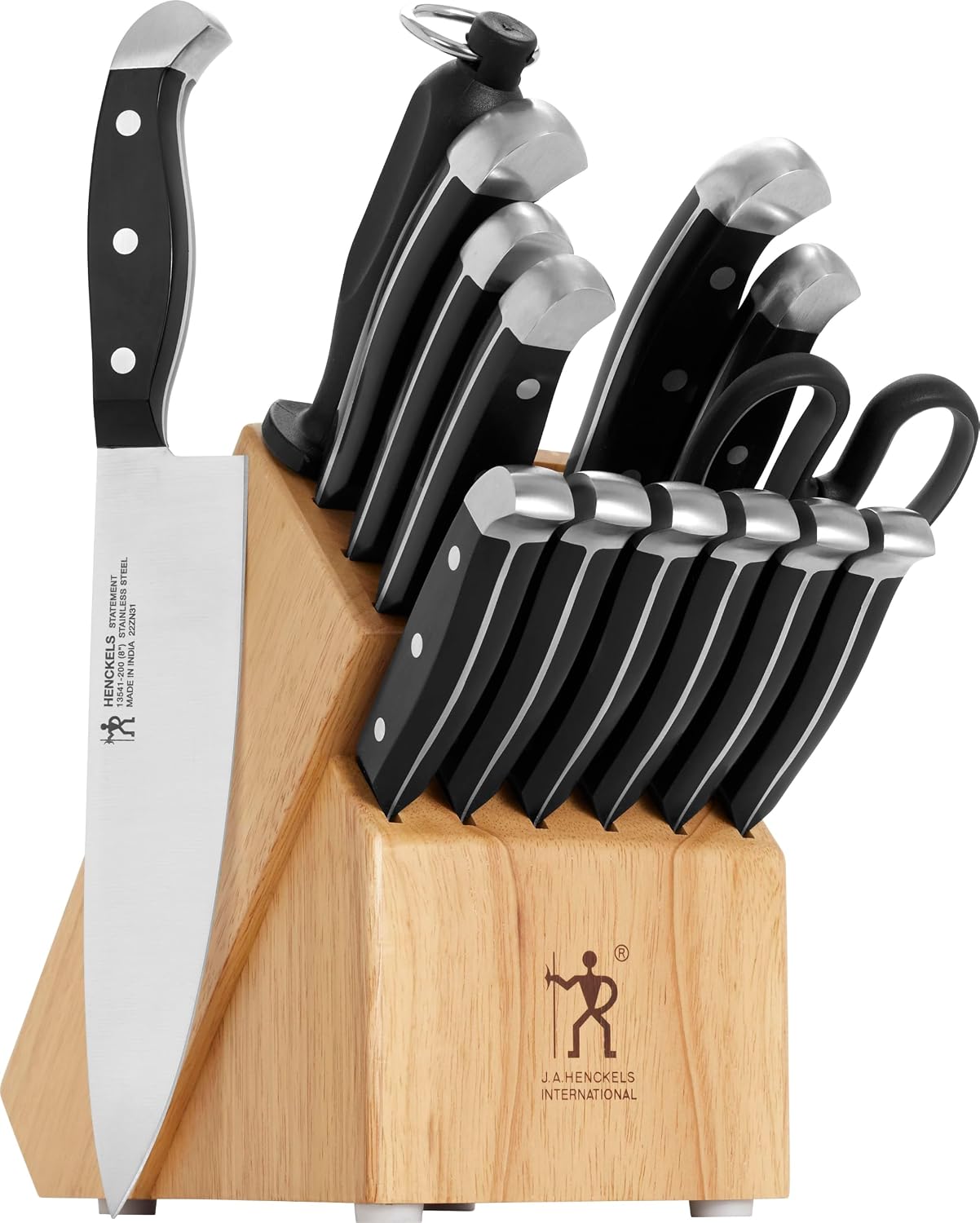
Henckels Statement 8-Inch Chef's Knife
Scandalous sharpness out of the box, balanced handle, easy pinch grip
Steel is arguably soft, needs honing every 10-15 diced onions
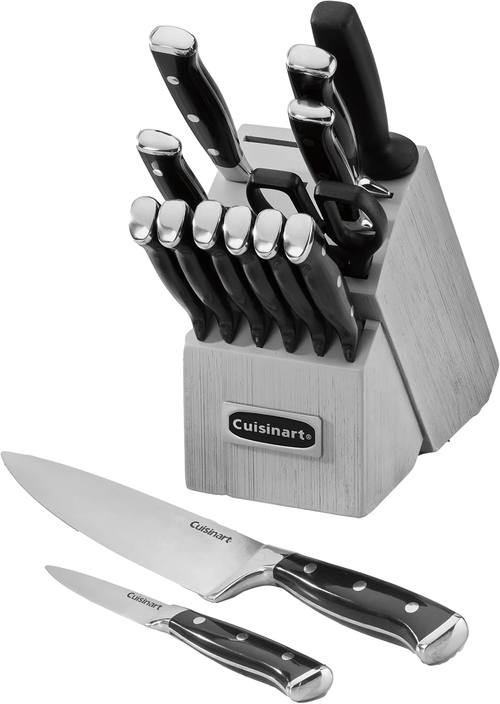
Cuisinart Classic Forged Triple Rivet 15-Piece
Best steak knives I've ever used, quality feel on the chef's knife
Paring knife handle cracking reports after six weeks
Prices and availability were captured from Amazon Creators API and may change.
The Grip Basics Nobody Tells You
Before I get into the knives I actually own, let's talk about the grip itself. The pinch grip is the one you want. You pinch the blade between your thumb and index finger right where the blade meets the handle, then wrap your other three fingers around the handle. That's it. That's the whole secret.
But here's what the tutorials don't show you: if the knife has a bolster that's too thick, or a handle that's slick and slippery when wet, that pinch grip turns into a death grip real fast. I've held knives where my hand cramped after 20 minutes of prep because the handle geometry fought against me.
The Henckels Statement handles this well. The Cuisinart handles this surprisingly well for the price.
The other grip, the handle grip where you just wrap all four fingers around the handle, is for people who don't do a lot of volume. It gives you less control and more arm fatigue. I use it for maybe 5% of tasks, usually when I'm dicing something soft and don't need precision.
The Henckels Statement: What Two Years Taught Me
I bought my Henckels Statement 8-inch chef's knife during a Prime Day sale about two years ago. The first slice through a tomato was so effortless I laughed out loud alone in the kitchen. My dog looked up at me like I'd lost my mind.
The pinch grip on this knife is natural. The handle has a slight curve that fits the palm, and the bolster is slim enough that your thumb and index finger can pinch the blade without fighting metal. I've done full prep shifts with this knife, probably 200 cuts or more in a single sitting, and my hand doesn't cramp.
Here's the flaw: the steel is arguably soft. After two years of daily use, I'm honest about this. I have to hone it every time I pick it up, and I sharpen it on my 1,000-grit whetstone every three to four weeks. If you're not willing to maintain an edge, this knife will frustrate you.
I've also seen the rust spots. I hand-wash and dry immediately, so mine hasn't rusted. But I've seen enough reports from owners who left it wet overnight to know the spots are real. Along the handle and spine, little orange flecks by morning. Hand-wash, dry it, and you're fine. Ignore that, and you'll be crying later.
For the grip question specifically: the Henckels is the knife I'd hand to someone who wants to learn the pinch grip. The handle gives you feedback. You know when your grip is right because the knife feels like an extension of your arm.
The Cuisinart Classic Forged: The Surprising Contender
I wasn't expecting to enter a committed relationship when I bought the Cuisinart Classic Forged Triple Rivet 15-piece set. At around $120 for the full set, I figured I'd get decent knives I could recommend to friends who didn't want to spend Henckels money. Two years later, I'm still recommending it, and I've recommended it to more friends than any other set.
The chef's knife in this set has a handle that's slightly thicker than the Henckels, and the triple rivet construction gives it a solid, no nonsense feel. The pinch grip works well, though I'll admit the handle is a touch slick when my hands are wet. Nothing dangerous, but I notice it.
Here's the thing I have to be honest about: the paring knife handle has cracked from the rivet to the edge after six weeks of hand-washing and proper care. That's not my paring knife, but I've seen enough reports from owners with the same failure to know it's a pattern. I haven't had it happen to mine yet, but I'm watching it.
The steak knives in this set are the best I have ever used, and I've used a lot. I've seen people buy a much more expensive set that rusted and chipped within a week. This set is still going strong after two years. At $120 for 15 pieces, that's about sixteen cents a day. My premium set that rusted in a week cost me $4.30 a day.
For the grip question: the Cuisinart chef's knife is a fine knife to learn on, but the Henckels has better feedback. If you're buying the Cuisinart set because it's what your budget allows, you're getting a knife that will serve you well.
The Arcos Paring Knife: A Razor Blade With a Handle
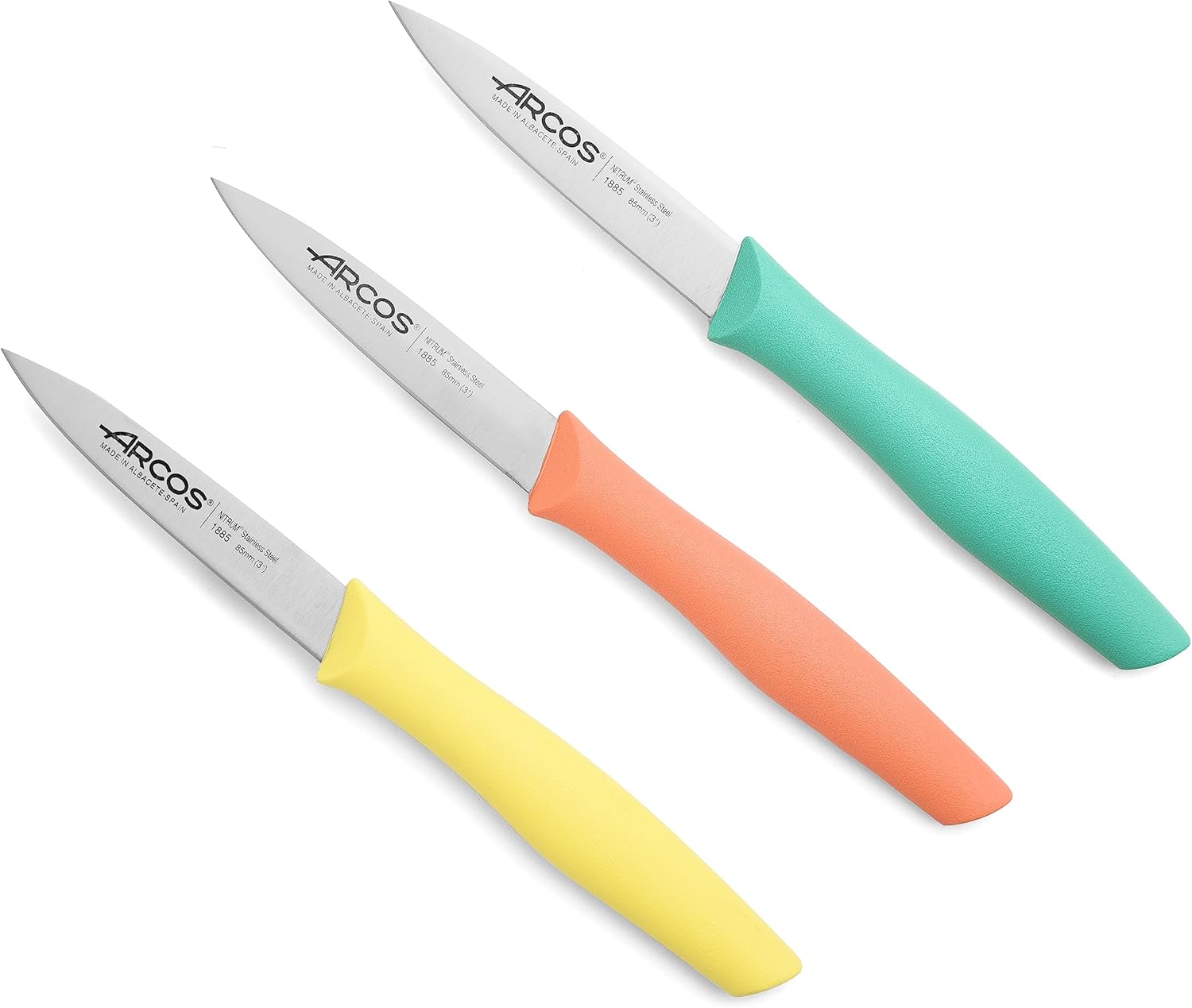
The Arcos Paring Knife Set of 3 is the one I tell people to buy when they ask about detail work. I've bought this set twice, and the first set is still sharp after years. That's not an exaggeration.
The grip on a paring knife is different. You're not doing the same pinch grip. You're holding it like a pencil for detail work, or choking up on the blade for peeling. The Arcos handles this well because the handle is slim without being flimsy.
The metal is unique. I don't think it would ever rust. I've left these in conditions that would destroy other blades, and they just don't corrode. Great value for the money, and cheap enough that if they get damaged, I won't have a problem tossing them.
The lesson for grip: a paring knife is a razor blade with a handle. Before you press down to cut, be sure you have the blade side down. And be careful with your fingers. These are the knives that slice you when you're not paying attention.
What KitchenAid Taught Me About Grip
I'll keep this short because I don't like to kick a brand when it's down. A cheap KitchenAid knife is what you say when you're describing what someone uses because they refuse to learn how to sharpen. I've held them, and the handles are slick and slippery in a way that makes the pinch grip feel unstable.
If you're learning to hold a chef knife, don't learn on a KitchenAid. You'll develop bad habits compensating for a bad handle.
The Sharpening Question
You can hold a knife perfectly and it won't matter if the edge is dull. A dull knife is more dangerous than a sharp one. The struggle of 59 years in the kitchen isn't just frustrating, it's how people lose fingertips. A razor-sharp blade that cuts clean is safer than a dull one that slips.
I've heard every excuse. I don't have time. I don't know how. I'll just buy new ones. Here's the truth: a 1,000-grit stone and ten minutes a week will change your kitchen more than any new knife purchase. I've sharpened more knives than most people will ever own, and I can tell you the edge is everything.
If you're holding the knife correctly and it's still struggling through a tomato, the problem isn't your grip. It's your edge.
How To Practice Your Grip Tonight
Here's my advice, and it's the same advice I'd give to a new line cook. Grab your chef's knife, get a bag of onions, and practice the pinch grip for 20 minutes. Don't worry about speed. Worry about consistency. Every slice should feel the same.
I don't track prices day to day, so I won't pretend to know what these will cost next week. But I know what these knives cost me, and I know what they've given back. The Henckels Statement is the knife I reach for when I need precision. The Cuisinart set is what I recommend to friends who want a full block without spending a fortune.
If you're going to buy one knife and learn the grip properly, get the Henckels Statement. It'll teach you what a good handle feels like. If you're building a full set on a budget, the Cuisinart Classic Forged is the one I'd buy again. Just keep an eye on that paring knife handle.
My Honest Bottom Line
The grip matters, but not as much as the edge. Hold the knife with a pinch grip, keep it sharp, and hand-wash it every single time. That's the whole system. I've been doing this for 16 years, and I've got the scarred knuckles to prove it. Learn the grip, keep the edge, and you'll never struggle through a tomato again.