A kitchen knife set comparison is easy to write badly. You count the pieces, you quote the steel, you call the block handsome, and you move on. I have spent sixteen years in professional kitchens, six of them on a fine dining line and four running a butcher shop, and I have sharpened thousands of blades, from twenty-dollar stamped knives to four-hundred-dollar gyutos. In all that time, piece count has never once been the thing that made a knife good. The chef's knife is the set. Everything else is garnish.
Related: How to Hone a Knife Without Rolling the Edge
The short version: the HENCKELS Solution 8-inch Chef Knife is the one knife I would put in a beginner's hands today, the Brewin 3-piece set is the better gift, the COKUMA set is the drawer set for a first apartment or a camp box, and the Global 11-piece block is a countertop purchase more than a cooking upgrade.

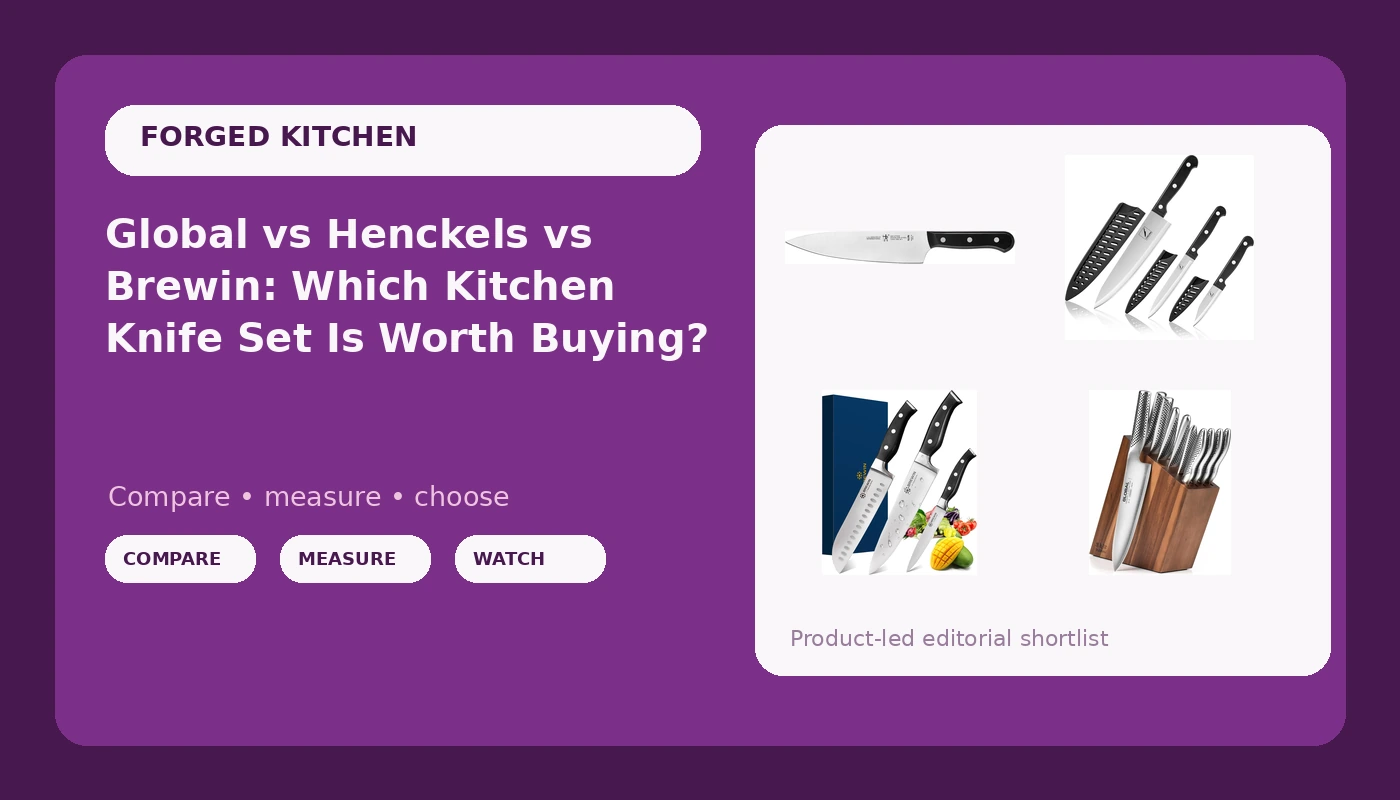
HENCKELS Solution Razor-Sharp 8-inch Chef Knife
The knife that does 80% of the work in any kitchen, classic German chef's profile, comfortable for long prep sessions
One knife only, no utility or paring knife, and a bolster takes practice to sharpen around
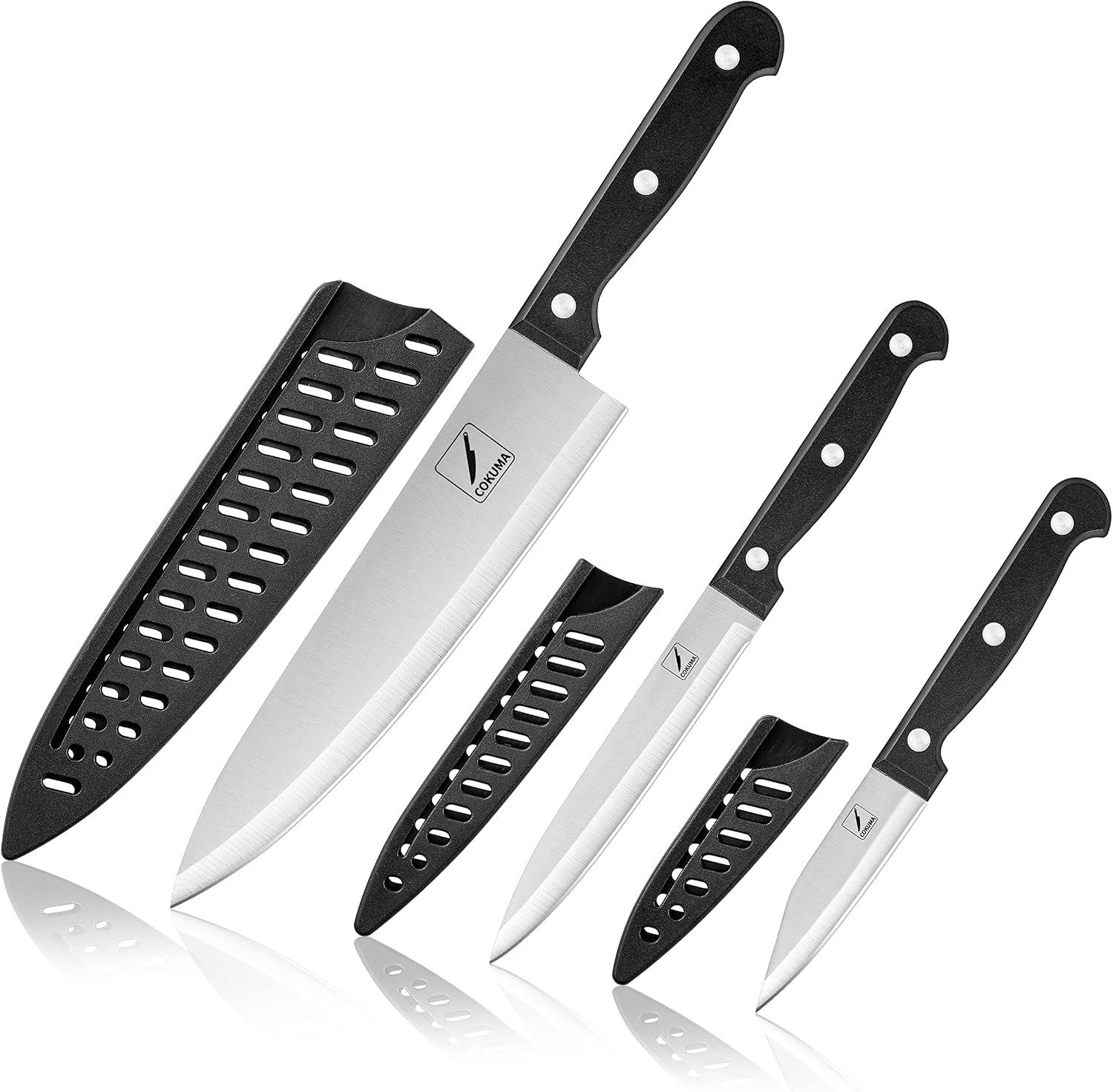
COKUMA Kitchen Knife, 3-Pcs Knife Set With Sheath
Cheapest way to cover chef, utility, and paring tasks, and the sheaths make storage safe
Stamped stainless and slim black handles, sheaths are for the drawer, not for a busy board
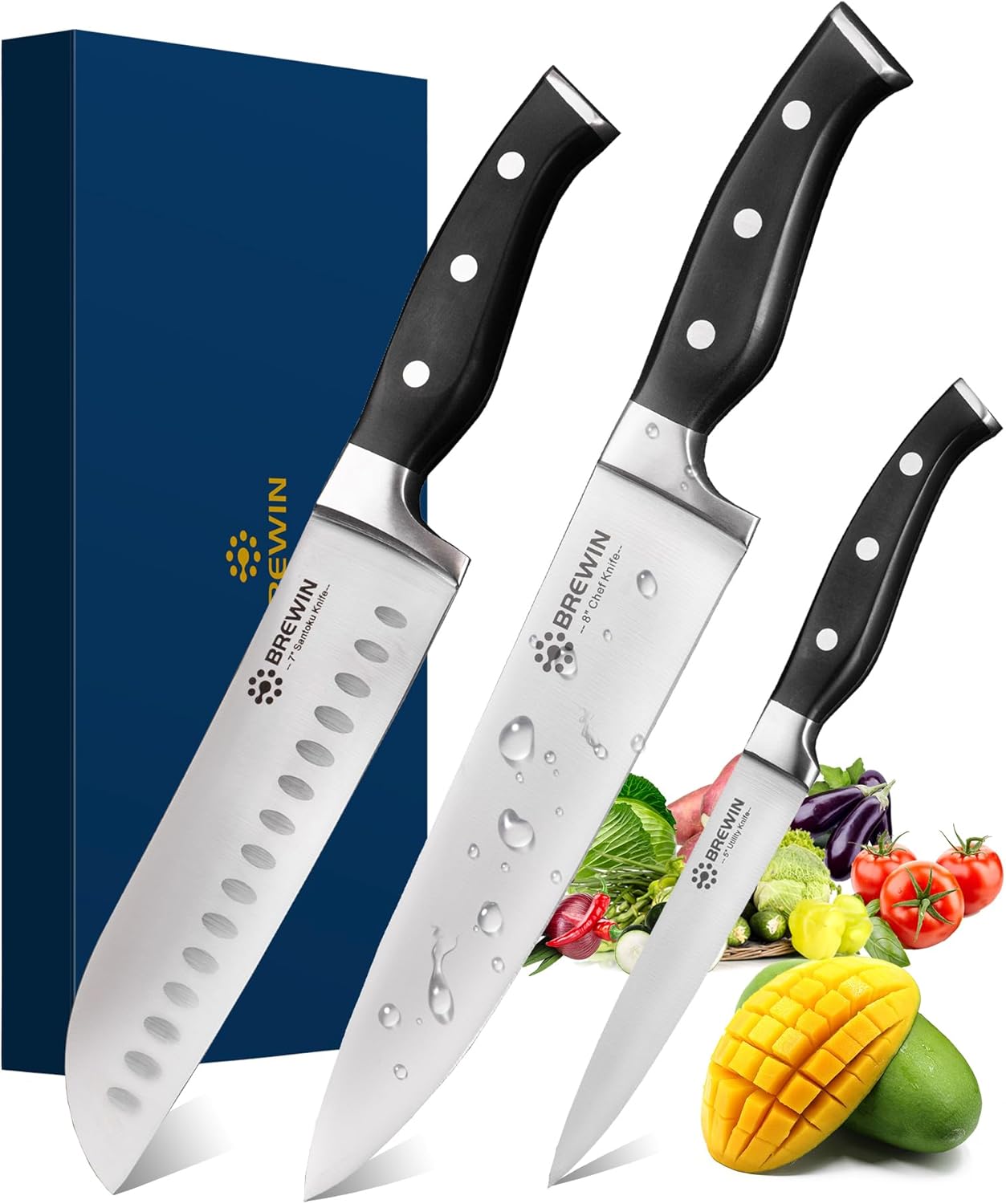
Brewin Professional Kitchen Knives, 3PC Chef Knife Set
High carbon stainless with a Japanese-style cooking knife profile, arrives in a gift box
Three knives and no block or guards, and high carbon steel punishes anyone who leaves it wet
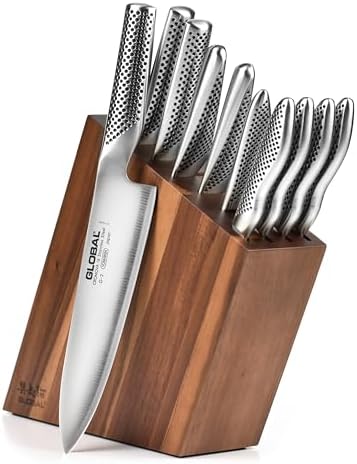
Global 11 Piece Knife Set with Acacia Block
A complete countertop set with an acacia block, covers every cutting job in a home kitchen
You pay for eleven pieces when three would do, and block storage can dull edges on insertion
Prices and availability were captured from Amazon Creators API and may change.
How I judge a kitchen knife set
Three things, in order. Steel that takes an edge and holds it. A handle I can still hold after two hundred cuts. And geometry I can sharpen on a stone without fighting a bolster.
A knife set is 80% chef's knife. That is not a slogan, it is what a prep shift looks like: onions, carrots, potatoes, a chicken broken down, then service. The utility knife comes out for a sandwich. The paring knife comes out for a strawberry. The chef's knife does the work, and if it is wrong, nothing else in the box saves the purchase.
Full tang matters to me. Steel that runs the full length of the handle is the difference between a knife and a toy, and a bolted handle is a knife that will fail you mid-service. I have watched a handle separate from a blade on a Saturday night, and I have never forgotten it.
Stamped steel is not bad, though. It is just not a knife you hand to your grandkids. Thin, light, quick to sharpen, cheap to replace. For a first apartment, a rental kitchen, or a camp box, stamped is the sane call.
The last thing I check is the small stuff that ruins sets. A block that grips the blade on the way in will dull it over months. A serrated bread knife that cannot slice bread is dead weight. Steak knives are not a feature, they are filler that inflates the piece count.
HENCKELS Solution Razor-Sharp 8-inch Chef Knife: the one-knife answer
This is the product I would hand to someone who has never owned a real knife. Eight inches is the right length for a home chef's knife: long enough to break down a chicken, short enough to control on a shallot.
The listing leans on German engineering and a hundred years of mastery, which is marketing copy, but the shape it describes is the shape that has worked in Western kitchens for a century, and for good reason. A gentle curve, a belly that rocks through herbs, a tip that can do fine work.
What you give up is everything else. No utility knife, no paring knife, no block, no guards. If the knife has a bolster at the heel, you will either learn to sharpen around it or you will let that half inch go dull. That is a maintenance reality, not a defect. A dull heel is the most common problem I see on home knives, and it always traces back to someone avoiding the bolster on the stone.
COKUMA Kitchen Knife, 3-Pcs Knife Set With Sheath: the drawer set
Three knives, three jobs: an 8-inch chef's knife, a 4.5-inch utility knife, and a 4-inch paring knife, all stainless with black handles and each one in its own sheath. That is a sensible kit, and the sheaths are the part I actually like. Loose knives rattling in a drawer chip each other, and a set that comes with guards is a set somebody thought about.
Where it lands for me is the starter tier. The handles are slim, and slim handles on a long prep session make my hand cramp. This is the set I would put in a first apartment, a cabin, or a travel box, not the set I would build a decade of cooking around. If you cook twice a week and you want three knives for the price of lunch, this covers it, and you can upgrade the chef's knife later without feeling like you wasted money.
Brewin Professional Kitchen Knives, 3PC Chef Knife Set: the middle ground
Here is the set on this list with the most interesting steel story. High carbon stainless, a Japanese-style cooking knife profile, and a gift box that makes it an easy present for someone moving into their first real kitchen.
High carbon stainless is a trade. It takes a keener edge than a soft stainless, and it also stains and spots if you leave it wet on the board. I dry my knives immediately after every use and I have never had a problem. Someone who soaks a knife in the sink overnight will have a problem. That is not the knife's fault, but it is the knife's reputation, so it belongs in this comparison.
The three pieces cover the same jobs as the COKUMA set, with a thinner, harder blade that suits vegetables better than bones. If you break down whole chickens or cut through ribs, you want a heavier German profile. If your prep is onions, peppers, and herbs, the Japanese-style blade is the one that will feel sharper for longer between sharpenings.
Global 11 Piece Knife Set with Acacia Block: the countertop set
Eleven pieces and an acacia block. This is the set that lives on the counter and makes a kitchen look finished. If that is the goal, it does the job, and the acacia block is a nicer material than the dark-stained rubberwood you see on most sets at this tier.
My problem is arithmetic. Eleven pieces means you are paying for steak knives, a bread knife, and a second small knife you will touch twice a year. The chef's knife is still the knife doing the work, and it is one of eleven. That does not make it a bad knife. It makes it a purchase where a large share of the money goes to pieces that never see a cutting board.
There is also the block question. A knife block that holds blades by the edge, or that grips them tightly on the way in and out, will dull them over months. If you buy a block set, wipe and dry each knife before it goes in, and put it in the slot it belongs in. If the block gets crowded, the blades start touching each other, and chipped edges follow.
Buy this one if the countertop matters to you and you want everything in one order. Do not buy it expecting the chef's knife to outperform the HENCKELS or the Brewin, because it will not.
The trade-offs nobody puts in the listing
Sets sell on piece count because piece count is easy to compare. Performance is not.
A three-piece set with a good chef's knife beats an eleven-piece set with a mediocre one every single night of the week, and it costs less. The pieces you actually use, in order, are chef's knife, paring knife, utility knife, bread knife, and then a long silence before anything else matters. If a set gives you four steak knives, it is selling you a dinner party, not a kitchen.
The other trade nobody mentions is the bolster. A bolster is the steel collar between blade and handle. It protects your fingers and it makes sharpening harder, because the stone cannot reach the last half inch of edge unless you learn the angle. Bolsterless knives marketed as professional are a pet peeve of mine, because a knife with no finger guard and no heel is a knife that will eventually bite somebody who is working too fast. I would rather fight a bolster on the stone once a month than take a cut on a busy night.
And a honing steel is not a sharpener. It realigns an edge that has rolled. You need both, and you need to use them for different reasons.
You still need a stone
No knife recommendation is complete without this part. Any knife on this list will go dull, and the best knife in the world goes dull faster than a mediocre one if you never sharpen it. Sharpness is a maintenance habit, not a purchase.
What you need is a 1,000-grit whetstone, a honing steel, and ten minutes a month. The 1,000-grit stone does the actual work: soak it, find your angle, and make consistent passes until you raise a burr along the whole edge, then flip and repeat. The honing steel gets used before every session, a few light strokes per side to realign the edge. That is the whole system, and it costs less than one good knife.
Do that and a cheap set will out-cut an expensive set that lives in a block and never gets touched.
What I would actually buy
If you are buying one knife and one knife only, the HENCKELS Solution 8-inch Chef Knife. It is the size and shape that does the most work, and it leaves room in the budget for a stone.
If you want a matched trio and you cook vegetables more than you break down meat, the Brewin 3-piece set. High carbon stainless rewards the person who dries their knives, and it punishes the person who does not.
If you want three knives for very little and you are outfitting a rental or a camp kit, the COKUMA set with sheaths.
And if the goal is a finished counter with a block and every tool in one box, the Global 11-piece set with the acacia block. Just know what you are buying: convenience and looks, not eleven knives worth of cooking.
Whichever one you pick, buy the stone at the same time. A dull knife is a confession, and I have heard enough of them.